Inside EPM’s Sandbox for Smarter Utilities
EPM created a multi-service Sandbox replicating water, gas, and energy networks to safely test digital solutions. It reduces risks, accelerates innovation, and enables smarter, more sustainable utilities.
EPM: A Cornerstone of Medellín’s Development
Grupo EPM (Empresas Públicas de Medellín) brings together 47 companies operating in five Latin American countries — Colombia, Chile, Panama, El Salvador and Guatemala. Since 1955, the group has delivered public services to a population exceeding 40 million. Over the decades, the company has earned recognition not only for its reliability and quality of service but also for its strong commitment to sustainability, social responsibility, and innovation.
EPM operates in a context where utilities are not just technical infrastructures but key enablers of public well-being and urban transformation. Medellín itself has positioned itself as a hub of science, technology, and innovation in Latin America, and EPM has been a critical ally in advancing that agenda. With its large and complex networks — spanning energy distribution, water systems, and gas grids — the company faces both an enormous responsibility and a unique opportunity: to integrate emerging technologies that make these systems smarter, more efficient, and more sustainable.
This ambition, however, comes with real challenges. Unlike digital-native sectors that can experiment quickly and at low cost, utilities manage critical infrastructures that cannot afford failure. Interruptions in service or errors in implementation can generate major social, economic, and environmental consequences. For EPM, the question has always been: how can a company that manages such essential services continue to innovate without putting its networks, its customers, and its reputation at risk? The answer is the Sandbox.
Why Medellín’s Utilities Sector Needed a Sandbox
Testing new technologies in operational environments is particularly complex for utilities. Once infrastructure has been built and is serving millions of users, even minor changes can be costly and disruptive. A pilot project that requires interventions in a real water distribution ring or a gas pipeline can expose EPM to significant risks: service interruptions affecting entire neighbourhoods, unexpected technical failures, or high costs for reengineering and recovery if the technology does not work as expected.
Moreover, traditional procurement and implementation processes in utilities are slow and expensive. Developing a new solution from scratch often means going through multiple contracting cycles, regulatory approvals, and design iterations, which can take years before even the first field test is conducted. For a company like EPM, which faces growing demands for energy transition, digital transformation, and sustainability, this traditional pace is simply not fast enough.
Recognizing these constraints, EPM decided in 2022 to create a new approach. The company needed an environment where it could:
- Validate disruptive technologies while minimizing technical, commercial, and operational risks.
- Design and implement innovative solutions for a new generation of residential utilities and foster smart territories.
- Accelerate the innovation cycle, shortening timelines from concept to prototype, pilot, and deployment.
- Collaborate efficiently with suppliers and academia through agile mechanisms — such as co-development, crowdsourcing, and coopetition — without lengthy contracts or high initial investments.
- Gather reliable data to validate business cases before committing to large-scale rollouts
Thus, the EPM Sandbox was born: an innovative platform with controlled, modular, and replicable infrastructure, enabling safe, effective innovation and fostering open collaboration.
How the Sandbox Works — and How it Evolved
The EPM Sandbox functions as a “miniature city,” recreating real-world conditions of water, gas, and energy networks on a smaller scale. Instead of intervening in operational networks, EPM built dedicated testbeds to replicate pressure conditions, simulate leaks, install sensors, and monitor data in real time. These environments are technology-agnostic, accommodating various suppliers and use cases.
The Sandbox’s development reflected the distinct challenges of each service:
- First steps: water and energy. In 2022, EPM prioritized building Sandbox infrastructure for water and energy, as these networks allowed more flexibility to replicate at a smaller scale. For energy, the company created modular racks and systems to test smart lighting, meters, and sensors. For water, EPM constructed a scaled distribution network with tanks, pumps, and valves, enabling pressure regulation tests and leak simulations. By 2024, the water Sandbox was fully operational, and the energy Sandbox became a key platform for pilot projects.
- A more complex challenge: gas. Gas distribution presented greater complexity and risk. Its flammable nature, safety classifications, and high-cost equipment required a longer design process. EPM invested in specialized protocols and infrastructure, eventually establishing a unique regional test environment for safe leak simulations, fraud detection, smart device validation, and advanced data analytics.
Today, the Sandbox supports multiple smart grid use cases across EPM’s business lines and acts as a crucial enabler for smart city solutions — especially as it expands through urban living labs.
The Sandbox has evolved into a comprehensive multiservice platform, integrating test environments for water, energy, and gas. This allows EPM to validate cross-cutting technologies such as digital twins, Industrial Internet of Things (IIoT) solutions, interoperability standards, cybersecurity, and advanced analytics involving artificial intelligence.
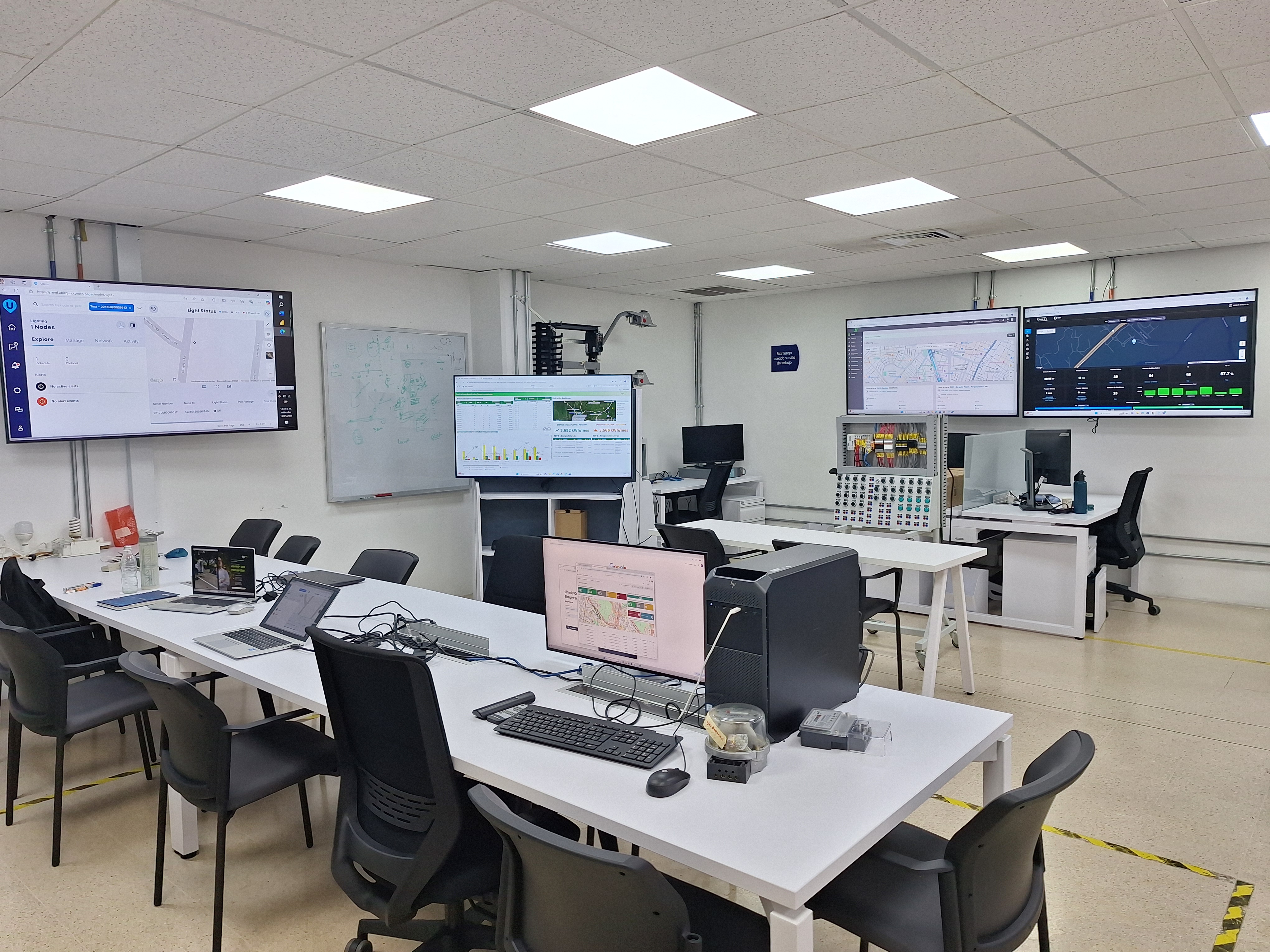
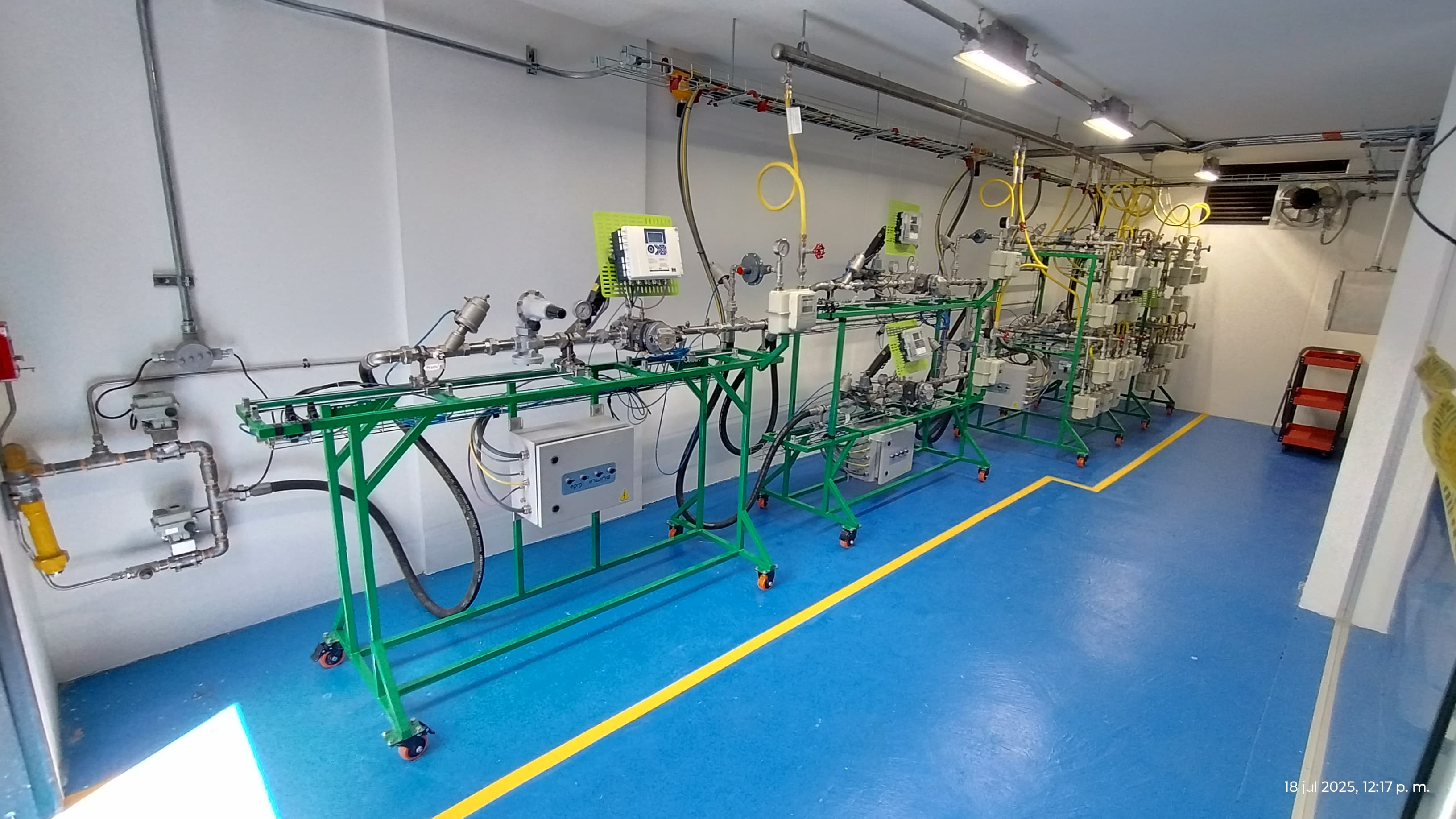
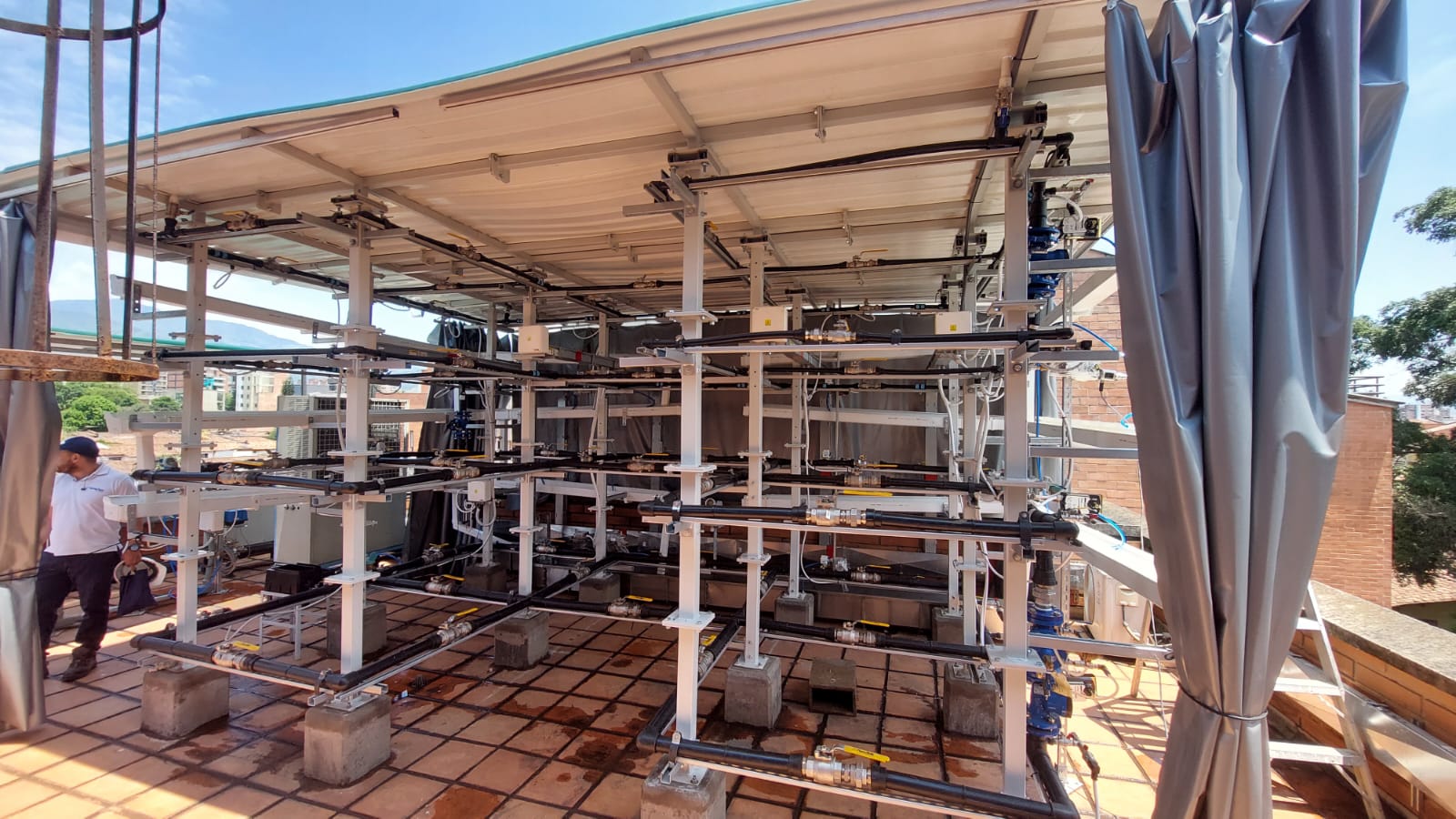
Images sourced from Grupo EPM, illustrating the Sandbox Infrastructure.
Piloting the Future: Successful Projects
Each technology tested in the Sandbox is connected to data platforms, ensuring that EPM can collect, transmit, and analyse information under real operating parameters. This makes it possible not only to measure whether a device or system works, but also to assess its interoperability, cybersecurity, and long-term sustainability.
Some of the projects successfully piloted in the Sandbox and now scaling into real operations include:
Water
- Optimal pressure control at critical points, analysing three control algorithms and enabling deployment to over 20 pressure regulator stations (serving more than 20,000 users).
- Digital twins of secondary network behaviours supplying over 2,500 users.
- Modernisation alternatives for valve controllers, yielding benefits exceeding USD 13,000 per valve, with a potential of around 1,000 valves.
- Enhancing control system availability and redundancy, enabling prompt valve closures to minimize damage, and reducing technical losses.
- Interoperability models for end-user devices, achieving an advanced, network-agnostic metering solution using low-power communication networks.
Gas
- Quality control improvements in network loops and remote macro-metering, reducing non-technical losses (over 100,000 m³, approximately 30 loops), boosting operational efficiency (exceeding USD 100,000), and advancing toward a sustainable, digitalized energy model (monitoring over 300,000 m³/month).
- Development of prepaid gas mechanisms for city events (over 30 per year), enabling new payment gateways and remote activation flexibility.
Energy
- Integration of photovoltaic plants via Power Purchase Agreements (PPAs) nationwide — over 8 plants integrated, with more than 20 in progress.
- Remote management platforms for public lighting — over 2,000 remotely managed points across EPM’s coverage regions.
- Network segment energy loss detection, contributing to a 4 percent recovery (roughly 3 GWh/year, which equals about USD 1M) and safeguarding an estimate of 45 GWh/month (approximately 1,500 devices).
- Critical asset monitoring (transformers) using IIoT sensors.
- Advanced analytics for vegetation control on distribution networks, supporting efficient operational planning for over 400,000 plant species.
Collectively, these pilots demonstrate the Sandbox’s role as a launchpad for technologies that would otherwise be too risky, slow, or costly to test in real operations
Transformative Impact of the Sandbox on EPM’s Innovation and Efficiency
The Sandbox has transformed the way EPM approaches innovation. Instead of viewing infrastructure as a barrier to experimentation, the company has turned it into a platform for continuous learning and adaptation.
The impact can be measured across several dimensions:
- Operational Efficiency: Pre-testing solutions reduces the risk of costly failures and ensures only proven technologies are deployed, saving time and resources. Implementing the Sandbox has generated benefits exceeding USD 5 million.
- Risk Reduction: The controlled environment enables experimentation with disruptive ideas without endangering users or critical services, lowering the threshold for innovation and encouraging bold initiatives.
- Agility: The Sandbox drastically shortens validation and deployment cycles — what once took years now takes weeks or months, allowing rapid transition from concept to production.
- Ecosystem Strengthening: Through Ruta N (the city’s innovation Hub), technology companies, solution developers, and startups use the Sandbox to test and validate developments, creating a virtuous cycle of open innovation that connects EPM with the local and global science and technology ecosystem. It also mobilizes external resources — both financial and intellectual — that enhance technology and innovation initiatives.
- Capability Development: The Sandbox serves as a training and learning space for EPM teams, fostering new expertise in data, digital technologies, and advanced system operations.
- Sustainability and Digital Transformation: By validating technologies that reduce losses, improve efficiency, and enable smart networks, the Sandbox directly supports Medellín’s sustainability and smart city goals.
Ultimately, the Sandbox embodies EPM’s vision of a utility that is not only reliable but also innovative, adaptive, and future-ready. It is a tangible example of how a traditional infrastructure company can reinvent itself in the digital age — leading the way for other cities and utilities in Colombia, Latin America, and beyond.