
GovTech Intelligence

From actionable GovTech use cases to pioneering studies and strategic insights, we strive to create unparalleled opportunities for sharing, learning, and applying knowledge. 

See here the global insights on GovTech ranging from reports, thought leadership articles, use cases, videos and much more. 

Kyiv Digital, a city-level digital public infrastructure interface, integrates services and official communication to reduce fragmentation and support continuity of municipal operations during prolonged disruption.From Fragmented Services to the Need for a Unified Digital ExperienceKyiv, home to almost four million residents, manages a wide range of municipal services spanning transport, utilities, safety, administrative services, and civic participation. Historically, these services operated through separate departmental channels, each with distinct interfaces, processes, and communication mechanisms. As a result, residents were required to navigate multiple websites, applications, and communication channels to manage everyday interactions with the city. For municipal authorities, this fragmentation created operational silos, limited visibility across services, and slower coordination.These challenges were not rooted in the absence of digital tools, but in the lack of a unifying city-level digital interface. Residents faced fragmented access to services and information, while the municipality lacked a single, trusted channel through which it could reliably communicate service updates or operational guidance at scale.While these structural constraints had been recognised prior to the onset of sustained disruption, they became significantly more consequential under stress conditions. Rapidly changing service availability and operating constraints increased demand for timely, official information, while municipal departments operated under limited capacity. Without a consolidated digital access point, both residents and city authorities faced increased operational friction and reduced predictability in service delivery.In this context, the core challenge was both institutional and operational: how to provide residents with predictable access to essential municipal services and official information through a city-operated digital channel, while enabling more effective coordination across municipal operations under prolonged stress conditions.Building a City-Level Digital Public Infrastructure InterfaceIn response to these challenges, the City of Kyiv established Kyiv Digital as a city-operated digital public infrastructure interface, owned and operated through the municipal administration. Strategic oversight, service prioritisation, and accountability remain within local government, ensuring alignment with public policy objectives and public service mandates.Since its launch in 2021, the Kyiv Digital app has become the city’s primary resident-facing digital entry point, providing a consistent and recognisable interface for municipal interactions. Today, it serves the majority of the city’s residents, reaching a level of adoption that allows it to function as a default digital entry point for high-volume municipal interactions. Rather than operating as a standalone application for individual services, Kyiv Digital was conceived as a unifying interface that standardises how residents access city services, while allowing flexibility in how underlying systems evolve over time.The initial implementation focused on public transport and mobility—one of the most frequent points of interaction between residents and municipal services. This high-volume use case provided a practical foundation for broader expansion, establishing delivery patterns and technical capabilities that could be extended incrementally as new services were added.As the platform evolved, the City of Kyiv deliberately differentiated resident-facing channels based on usage patterns. While the Kyiv Digital app concentrates on high-frequency and high-transactional interactions, services that require extensive documentation, longer processing times, or infrequent engagement are delivered through a dedicated Kyiv Digital Services Portal, launched in 2024. Together, these channels form a coherent city-level digital ecosystem, optimised for different types of service interactions.The solution operates at the local (municipal) level of government and primarily contributes to the development of digital public infrastructure, while also supporting digital service delivery, citizen–government communication, and municipal operations.From the outset, Kyiv Digital was designed to address several interrelated objectives, including:reducing fragmentation in resident access to municipal services,establishing a clear and trusted digital communication channel,improving coordination across municipal departments, andsupporting continuity of municipal operations under changing conditions.In practice, this approach has enabled simplified resident access, more consistent communication, and improved operational coordination across services.Equity and inclusion considerations informed both the design and rollout of the solution. By consolidating services and official communications into a single city-operated interface, Kyiv Digital aimed to reduce barriers created by complex administrative structures and multiple entry points. Accessibility features, including screen reader compatibility and simplified navigation, support use by people with disabilities, while offline functionality ensures that critical information remains accessible even when connectivity is disrupted, reinforcing the principle that essential municipal information should remain available under adverse conditions.Implementing Kyiv Digital: Governance, Architecture, and DeliveryKyiv Digital is governed as an official municipal function, with governance arrangements defining ownership, decision rights, and accountability within the city administration. This structure enables coordination across departments while maintaining compliance with municipal policies, ensuring that the solution operates as an extension of city operations rather than as a standalone technology initiative.Delivery relied on internal municipal capabilities, including product ownership, service coordination, technical management, cybersecurity, and agile project delivery. Cross-departmental coordination mechanisms supported alignment between resident-facing interactions and back-office operational capacity.From a technical and architectural perspective, Kyiv Digital was implemented as an interface layer that integrates existing municipal digital infrastructure rather than replacing it. Kyiv Digital does not function as a full service-orchestration platform in the technical sense. Instead, it operates as a resident-facing interface that brings together services delivered through multiple underlying systems. This integration-first approach preserved prior investments, reduced duplication, and enabled incremental capability expansion.At the national level, Kyiv Digital ecosystem favours existing state digital public infrastructure rather than duplicating it. Where relevant, the city leverages services such as the Diia digital identity (Diia ID), Diia electronic signature, and state document exchange services for verification of government-issued documents, including driving licenses. This approach allows Kyiv Digital to remain focused on city-level service access and coordination, while relying on nationally governed DPI layers for identity, authentication, and document trust.Implementation combined in-house delivery with external technical support. External providers contributed to specific components, while strategic direction, integration decisions, and data stewardship remained under municipal control. Partnership arrangements were structured to maintain public oversight while enabling flexibility in development and deployment. Key stakeholders included municipal departments, city leadership, and residents, whose needs and operational realities informed prioritisation and service design.The rollout followed an incremental, phased approach, with services added based on priority, readiness, and operational feasibility. This allowed the city to adapt to changing conditions without disrupting existing services. Performance monitoring focused on usage and scale indicators, including resident adoption and transaction volumes, which informed prioritisation and continuous improvement.Implementation under sustained disruption introduced capacity, coordination, and integration challenges. These were addressed through prioritisation of essential services, simplified user journeys, and incremental integration rather than large-scale system replacement.Kyiv Digital is built on a modular architecture that supports integration with multiple municipal systems, enabling new capabilities to be introduced without disrupting existing functionality and supporting both rapid adaptation and long-term stability. Security and data management are treated as foundational requirements, with measures in place to protect system integrity and resident data. Redundancy and offline capabilities further support continuity under adverse conditions.Outcomes and Transferable LessonsKyiv Digital now functions as a unified access point for municipal services and official communications, supporting millions of residents in their daily interactions with the city. Usage and scale indicators demonstrate sustained adoption across multiple service categories, including high-volume public transport transactions and participatory civic tools.The approach has also been referenced in international benchmarking exercises and recognised through a range of industry and public-sector engagements, including the UN Local Online Services Index (LOSI) and Smart City Expo World Congress.Kyiv’s experience highlights several lessons that may be relevant for other cities seeking to strengthen digital service delivery and operational coordination.1. Treat resident-facing digital access as infrastructurePositioning digital access as a core operational interface supports continuity and coordination across municipal services.2. Retain municipal ownership of the interface layerCity control over governance and integration is critical for cross-departmental alignment and long-term operational coherence.3. Differentiate channels by usage patternsHigh-frequency and transactional interactions benefit from lightweight interfaces, while document-intensive services require dedicated environments. Together, these interfaces can form a coherent city-level digital ecosystem, allowing residents to interact with municipal services through channels designed for different usage patterns.4. Design for backend evolution without user disruptionA stable resident-facing interface enables underlying systems to evolve incrementally, reducing the need for disruptive large-scale replacements.5. Enable orchestration without premature replacementAs service complexity increases, cities may need to strengthen service-orchestration capabilities across multiple systems and providers. Kyiv’s experience suggests that establishing a stable resident-facing interface can create the conditions for such orchestration to evolve over time, without requiring immediate replacement of legacy systems.In this article, “Digital Public Infrastructure” is used in a layered sense. Kyiv has developed its own municipal digital infrastructure to operate and integrate city services and communications under sustained disruption. Where nationally governed DPI components exist and are fit for purpose (for example, national identity, electronic signature, or state-level data exchange), Kyiv integrates and uses them rather than duplicating functionality. Kyiv Digital therefore operates as the city-level interface and integration layer across both municipal and national digital rails.
Kyiv Digital: Operating a City-Level Digital Public Infrastructure Interface Under Sustained Disruption
GGTC Kyiv, Kyiv City State Administration (KCSA)
The Environmental Analysis Information System (SIAE), is an in-house platform created by Grupo EPM (Empresas Públicas de Medellín) that integrates security, social, political, and territorial data to guide strategic decisions across Colombia and beyond.Decades of Service, Generations of ImpactGrupo EPM (Empresas Públicas de Medellín), comprising 47 companies operating in Colombia, Chile, Panama, El Salvador, and Guatemala, has provided public services since 1955 and currently serves more than 40 million people. Its core infrastructure, which forms the backbone of daily community life, includes 105 energy generation systems (solar parks, thermal and hydroelectric plants), 314,000 kilometres of transmission networks, 39 potable water treatment plants, 28 wastewater treatment plants, and 8,840 kilometres of gas networks, among others.As the Group’s geographic coverage expanded, mainly into territories marked by social inequality and security risks linked to armed conflict and illicit economies, the need arose to understand these areas using large open databases to make informed, swift, and efficient decisions. This led to the creation of the Environmental Analysis Information System (SIAE): a platform designed to integrate, process, and visualize data, enabling EPM to act responsibly and promptly, even in complex territories How a Public Utility Navigates Complex Sociopolitical RealitiesOperating a utilities company in Colombia means working within a context that has long been shaped by overlapping challenges: social inequalities, political transitions, and persistent security risks. For decades, regions such as Antioquia have experienced dynamics ranging from armed groups and illicit economies to protests and sudden shifts in local governance. These realities inevitably affect how communities interact with infrastructure and how companies like EPM can safely deliver services.For Grupo EPM, this context made one thing clear: technical capacity alone was not enough. Every new project required not only engineering expertise, but also a deep understanding of the territories in which the company operated. Sending maintenance crews to rural areas, building hydroelectric plants, or extending transmission lines could not be done without assessing and anticipating local risks. Protecting infrastructure meant ensuring employee safety and community engagement.That is why monitoring security conditions and context became essential. It was not enough to simply count thefts or homicides in isolation. The key was to connect these indicators to the broader environment: election results, socioeconomic realities, demographic trends, or protest activities. For EPM, understanding the context in a comprehensive way was a prerequisite for responsible action.Visualising the Reality of the Territory for Decision-MakingTo address this need, the Security and Impact Analysis team within EPM’s Security Directorate began designing what would become the Environmental Analysis Information System (SIAE). The idea was simple but transformative: build a tool that could integrate diverse data sources, georeference them, and display them through interactive dashboards.SIAE consolidates information from multiple institutions. The Registraduría Nacional del Estado Civil (National Civil Registry) provides electoral records. The Fiscalía General de la Nación (Attorney General’s Office) contributes crime statistics. The Policía Nacional de Colombia (National Police) shares public order data, and the Departamento Administrativo Nacional de Estadística – DANE (National Statistics Department) offers census and socioeconomic information. International organizations supply protest data, while municipalities contribute development plans. To this, EPM adds its own internal data on infrastructure and projects.For users, SIAE is not just a database but a way of visualising reality. Each dataset is georeferenced, appearing on maps where multiple layers can be combined. A security analyst can overlay crime statistics with electoral outcomes; a planner can compare municipal development plans with EPM’s proposed projects; and a project manager can cross biodiversity or watershed maps with infrastructure routes. Filters allow staff to zoom from national to local levels, and variables can be combined dynamically.Equally important, the platform was designed to handle the different rhythms of data updates. Protest alerts refresh weekly through APIs, crime and socioeconomic indicators update monthly or quarterly, and census or development plan data is renewed annually. Each indicator in SIAE carries a tag that shows its update frequency, so users know how current the data is. This flexibility ensures that even though the system integrates more than 40 sources with diverse timelines, the dashboards offer a coherent and actionable view.Images sourced from Grupo EPM, illustrating SIAE’s interface.Seeing beyond security: how the SIAE evolved to be used by the entire corporationThe first version of SIAE launched with five applications and 120 indicators, covering the most urgent dimensions of security and context. But it grew into something much broader.As the platform matured, new modules were added. Protest alerts updated weekly, municipal development plans, socioeconomic data layers, and hydrological information such as watersheds and recharge zones became part of the ecosystem. Internal EPM data was also expanded, linking projects and assets more directly to contextual information.By 2025, SIAE had grown into an ecosystem of 17 applications, fed by more than 40 public sources and enriched with company data. What began as a tool for security monitoring had become a corporate intelligence platform. Security analysts still relied on it to assess risks, but planners, strategy teams, and project managers also used it to align projects with local priorities and anticipate potential conflicts before they escalated.As a result of modelling SIAE data, the team developed a robotic desktop automation (RDA) that allows comprehensive security analysis reports for a territory to be generated in an average of 10.79 minutes, based on a specific geometry that can represent a project, work zone, or company infrastructure. This enables risk identification at a granular level — including neighbourhoods or rural communities — and allows this type of analysis to cover the entire infrastructure nationwideFrom Reactive to ProactiveThe impact of SIAE has been profound. An important metric for measuring its impact was the reduction of analysis time from 181 hours to an average of 10.79 minutes. Coverage also increased from 34% of projects and 19% of infrastructure sites analysed to 100% in both cases. The average cost per document dropped from between USD 80 and USD 2,667 to just USD 2.Two use cases exemplify the public value of this system: the first relates to an analysis conducted for the city of Cartagena on streetlights and security conditions in public spaces; the second involves responding to an interruption in water supply affecting around 1 million people.An analysis of streetlights in Cartagena’s green areas and beaches, based on the theory of perceived security in public spaces — which suggests insecurity can be linked to the quality of public lighting — enabled the study of historical and spatial crime data in these areas. The result was the identification of 158 zones with high crime rates and poor lighting, which were prioritized for intervention with the city’s mayor’s office as part of a broad public lighting upgrade plan.The second case involved preparation for a five-day interruption of water and sewage service in four municipalities of the Aburrá Valley Metropolitan Area, due to modernisation and maintenance at one of EPM’s most important plants in Antioquia. This interruption, aimed at benefiting 703,000 households, required analysing how to support the population during the absence of this essential service — using water trucks, hydrants, and bagged water. SIAE made it possible to identify the sectors that would be affected and had complex socioeconomic and security conditions, focusing efforts there. This enabled the distribution of staff and resources in these neighbourhoods, ensuring five days of service without complications and minimizing the population’s exposure to the scheduled outage.Today, SIAE is more than just a security tool: it is a way to view territories holistically. For EPM, it has meant safer teams, more resilient infrastructure, and a stronger relationship with the communities it serves. For other institutions, it offers a replicable lesson: by connecting data from different dimensions and building progressively, public organisations can turn complexity into intelligence and strengthen their ability to act responsibly. 
SIAE: How Medellín’s Utilities Company Built a Platform to See Beyond Security

Centre for the Fourth Industrial Revolution, Medellín, Empresas Públicas de Medellín-EPM
This article is authored by Aurelie Adam Soule Zoumarou, Minister of Digital, Republic of Benin.In November 2025, Benin hosted the Regional Summit on Digital Transformation in Western and Central Africa, co-organised with the World Bank. The event brought together Ministers, regulators, private sector leaders, and innovators from across the region and led to the adoption of the Cotonou Declaration, a collective commitment to accelerate digital transformation by 2030. Five Lessons From CotonouThe Regional Summit on Digital Transformation in Western and Central Africa, co-hosted with the World Bank Group in Cotonou in mid-November 2025, confirmed a significant change in how Western and Central African states approach digital technology.First, we have shifted from a sectoral logic to a systemic one. Digital is no longer perceived as a mere technological tool, but as a strategic infrastructure driving the economic, social, and institutional transformation of our countries.Second observation: the gradual end of working in silos. Discussions highlighted  an unprecedented alignment among ministries, regulators, private sector actors, and technical partners around common objectives. This willingness to pool resources, infrastructure, data, regulatory frameworks, and even human capacity is now recognised as essential for regional integration and digital sovereignty.Third, the Summit revealed a clear consensus on the urgent need to reduce the digital divide in all its dimensions: geographic, economic, social, and gender-based. Connectivity can no longer be measured solely by coverage rates, but by actual accessibility, quality of service, and citizens' ability to transform access into concrete opportunities.Fourth, human capital emerged as the driving force behind digital transformation. Training, reskilling, and retaining African talent appeared as a strategic imperative, equally critical to investment in physical infrastructure.Fifth and finally, the Summit laid the foundations for a shared vision of digital governance — particularly regarding data, artificial intelligence, and cybersecurity. The challenge is no longer simply to innovate quickly, but to innovate responsibly, building an environment of trust for citizens, businesses, and states alike.Why I Am Excited About the FutureWhat excites me most is the growing maturity in both discourse and action. Western and Central Africa are no longer content to simply follow global trends: we are now defining our own priorities, grounded in our realities, our needs, and our ambitions.I am also driven by the energy of Africa’s youth, who have made digital technology a space for expression, value creation, and innovation. Across the region, entrepreneurs, developers, women, and young people are transforming constraints into solutions — often with remarkable adaptability.Digital transformation is also a powerful accelerator of inclusion. It brings government closer to citizens, opens up remote areas, facilitates access to essential services, and creates new economic opportunities for populations that have long been left on the margins.What sustains my optimism is the strong collective commitment to building a sovereign and cooperative African digital ecosystem. The development of regional data centres, local cloud platforms, context-specific AI solutions, and harmonised regulatory frameworks all reflect a clear ambition: to make digital technology a lever for strategic autonomy and shared prosperity in our region.Our Priorities for 2030My colleagues and I share a guiding principle: digital transformation must be inclusive, sovereign, and sustainable,designed to serve our continent's development, rather than simply follow global trends.The first priority is universal quality connectivity. This means not only extending networks, but ensuring affordable, reliable, and resilient access — supported by regional infrastructure pooling and innovative economic models.The second priority focuses on building interoperable public digital platforms, including digital identity, payments, registries, and administrative services, that constitute the backbone of a modern and effective state. Such infrastructure must be designed from the outset with a regional perspective, to facilitate mobility, trade, and economic integration.We are also placing strong emphasis on data governance, cybersecurity, and the regulation of artificial intelligence. Harmonising our legal frameworks is essential to protect citizens' rights, strengthen trust, and attract responsible investment.Human capital development remains a cross-cutting priority. Scaling up digital skills training, supporting technology entrepreneurship, and promoting the inclusion of women and young people are essential levers for turning digital growth into sustainable employment.Finally, we place innovation at the heart of our action, with a firm conviction: the most relevant solutions for Africa must be conceived within Africa, built on balanced partnerships and strengthened cooperation between states.With the adoption of the Cotonou Declaration, we have set ambitious targets for 2030. As 2026 begins, the work to fulfill these commitments starts now.
From Cotonou to 2030: A New Chapter for Africa's Digital Future

GGTC Berlin
This article is co-authored by Kelly Ommundsen and Stephan Mergenthaler from the World Economic Forum, Timo Graf von Koenigsmarck and Marc Reinhardt from Capgemini, and Manuel Kilian from Global Government Technology Centre Berlin.One year after publishing our first flagship GovTech report, we take stock: where has GovTech come from, where did 2025 take us, and where is it all heading? A reflection on the milestones, the shifts in thinking, and what the rise of agentic AI means for what comes next. This article marks the one-year anniversary of our flagship report, The Global Public Impact of GovTech: A $9.8 Trillion Opportunity, produced jointly by the World Economic Forum, Capgemini, and the Global Government Technology Centre Berlin.Throughout writing the report, we kept asking ourselves: are we overstating the case? Is GovTech really as important as we claim?So we gathered the evidence. What we found was a $9.8 trillion opportunity — the public value governments could unlock through GovTech by 2034. This is not market revenue. It is impact that flows to society and business at large if governments implement GovTech responsibly and at scale. $5.8 trillion through efficiency, $1.1 trillion through transparency, $2.9 trillion through sustainability.That figure gave us confidence in the scale of what's possible. What became clearer over the past year is how unevenly that opportunity is being pursued, and how quickly the technological landscape has shifted beneath our assumptions.However, we were equally clear in the report: this figure is meaningless without execution. The opportunity is reserved for governments that actively reorganize to capture it. Supporting governments on this journey has been the cornerstone of our joint initiatives throughout 2025.2025: The Year GovTech Became UndeniableAs we look back at the past twelve months, it is clear that 2025 was the year GovTech further transitioned from a promising frontier to an operational necessity. We have identified six fundamental shifts that defined this year — moving from the high-stakes game of global geopolitics to the rigorous demand for real-world results. Underpinning each of these shifts is a single, evolving reality: the digital transformation of the state is no longer about testing what is possible, but about executing what is essential.1. The Emergence of the Agentic StateAgentic AI — systems capable of perceiving situations, reasoning through problems, and taking autonomous action within defined boundaries — emerged as the most consequential technological development of 2025. The speed and scale of these advancements are without precedent.For governments, the implications are profound. A significant portion of public sector activity consists of codified workflows: processing applications, verifying eligibility, issuing permits, and enforcing compliance. These are precisely the structured, rule-bound processes where agentic AI offers great transformative potential.This marks an inflection point in public sector digital transformation. The possibilities were explored this year in The Agentic State, a vision paper produced by a global group of government leaders and experts with the support of the Global Government Technology Centre Berlin and the World Bank.However, unlike DPI, where a shared blueprint already exists, we are only beginning to understand how to effectively integrate agentic AI into government operations. How should a state manage systems that act rather than merely advise? What does accountability look like when an AI agent initiates a process? We do not yet have established patterns to follow.While our original report anticipated that new technologies would continue to expand the horizons of GovTech, what we did not anticipate was the velocity. The speed at which agentic AI has moved from a laboratory concept to a commercial reality — and its sheer potential for public service — suggests that our $9.8 trillion valuation of the GovTech opportunity may look conservative in the future.2. Less Experimentation, More ExecutionGovTech has further matured in 2025, and we saw a continued shift away from pilots for their own sake toward a harder question: does this actually deliver value?Part of this shift is driven by global fiscal reality. With budgets tightening, the appetite for exploratory projects without a clear return on investment has diminished compared to five years ago. But confidence has also grown. There is now compelling evidence that well-executed GovTech solutions deliver substantial, measurable impact. This track record has raised the bar; governments today increasingly demand results rather than just experiments.Our report argued that “GovTech implementation does not happen by chance, but through strong execution.” We are encouraged to see this principle becoming the operational standard.The open question is how the rise of agentic AI will influence this momentum. Agentic systems demand experimentation, but of a different kind. Governments’ ability to pilot rigorously, learn quickly, and decide when to scale will be tested by technologies that behave fundamentally differently from what came before.The stakes have changed. Governments can no longer afford pilots that do not have a clear path to production, nor can they afford to wait years to explore technologies that competitors and adversaries are deploying at scale. This tension, between the need for rigor and the pressure for speed, will define GovTech execution in 2026.3. GovTech Moved Closer to the Centre of GovernmentIn 2025, Germany, the world's third-largest economy, finally established a dedicated ministry for digital, consolidating responsibilities previously scattered across six ministries. The signal was clear: GovTech is important enough to require and deserve a ministry of its own.At the start of 2026, Ukraine's Mykhailo Fedorov was nominated to move from digital minister to defence minister. Fedorov built Diia — the digital state in a mobile app. His transition underscores how digital leadership is increasingly seen as core statecraft, not a technical specialty.At the same time, across many governments, ministerial titles are only meaningful if they come with actual authority. What matters is whether a digital minister can reshape procurement rules, unblock data sharing, or implement workflow reform across entrenched ministries. In some countries, progress is visible. In most capitals, digital leadership has a seat at the table, but rarely the final word.Our report argued that GovTech is a whole-of-government discipline, not an IT function. What we saw in 2025 was precisely this shift: governments elevating digital from a technical function to a strategic priority. The question for 2026 is whether that elevation translates into power or remains symbolic.4. Digital Public Infrastructure as the Foundational BlueprintThe concept of Digital Public Infrastructure — common, re-usable building blocks for identity, payments, and data exchange — has further moved to the established blueprint for the digital transformation of the state.The UCL Institute for Innovation and Public Purpose recently published the first comprehensive global assessment of this shift, finding that 64 countries now have DPI-aligned digital ID systems, 97 have digital payment systems, and 103 have established data exchange platforms (see here). Furthermore, the 50-in-5 campaign, launched in 2023 to help 50 countries deploy DPI by 2028, has seen its membership grow from 11 to 30 nations. At 60% of its target, the momentum is significant.Equally important, DPI has become a shared vocabulary: a way for governments to learn from one another, rather than build in isolation.But quantity does not guarantee quality. In some jurisdictions, rapid deployment has outpaced interoperability, privacy safeguards, and inclusion.The question for 2026 is not just how many more countries deploy DPI, but whether the systems being built will withstand the weight we're about to put on them. When agentic AI starts making decisions based on identity verification, payment confirmation, and data exchange, flawed infrastructure will not merely slow delivery — it will amplify failure at scale.DPI is rightfully understood as the foundation on which everything else builds: tax collection, social protection, healthcare access. Without central identity, payment rails, and underlying data platforms, the efficiency and transparency gains our report described remain out of reach. What this underscores is a simple but consequential distinction — building DPI is no longer the challenge; building DPI that is interoperable, inclusive, and resilient is.5. Technology Became GeopoliticsTechnology has become political. This is not new, but 2025 made it clearer than ever. And for governments, the implications are direct: the most immediate way a state interacts with technology is not by regulating it or subsidising it — it is by using it. By running public administration on it. That is what GovTech is.This places GovTech at the centre of the global conversation around digital sovereignty. Digital sovereignty, not to be mistaken with the idea of full technological autarchy, is increasingly seen not just as a policy goal, but as a requirement for the infrastructure a government runs on. Throughout 2025, it evolved from a conceptual debate into a matter of operational resilience.We have seen this reflected in a growing move toward localised and diversified infrastructure. For instance, the Dutch parliament has called for a pause on certain cloud migrations to prioritise domestic or regional alternatives, while Austria has shifted collaboration tools to European providers to ensure closer alignment with local data standards. We are beginning to see similar questions emerge around Large Language Models: who provides them, under what conditions, and what continuity looks like as these systems become more embedded in government operations.But the more revealing signal came from what governments stopped doing. We saw procurement processes stall not because vendors couldn't meet technical requirements, but because decision-makers couldn't answer fundamental questions about supply chain resilience. What happens if access to this model is withdrawn? What if the training data reflects values we don't share or sourced from contested sources? What if the provider is subject to legal obligations that conflict with ours?These aren't hypothetical concerns. The question is no longer whether to use AI in government, it's whether governments can use AI without creating dependencies they can't afford. And for many governments, the honest answer is: we don't know yet.Our original report framed the value of GovTech through efficiency, transparency, and sustainability. 2025 has added a critical fourth dimension: sovereignty. The technology governments use to deliver essential services is now inseparable from the question of who controls access to that technology — and how to smartly manage interdependencies that come with it.6. A Larger GovTech Market, a Stubborn Bottleneck?Our report estimated the GovTech market at $606 billion in 2024, growing to $1.4 trillion by 2034. That estimate was tied to IT spending in the public sector, which is a conventional and defensible approach.But in light of what we have seen with agentic AI, this framing may need revisiting. If AI systems can take over tasks previously performed by service providers or internal staff, then GovTech is no longer competing only for IT budgets. It is eating into the broader share of services bought by the public sector — operations, case processing, compliance, customer service. The market we described may be larger than we thought, and it may look quite different.The paradox, however, is stark. As capability accelerates, governments’ ability to buy and deploy technology has barely changed. Procurement cycles designed for buying furniture are being asked to evaluate AI systems. Risk frameworks built around implementation failure haven't adapted for algorithmic bias or model drift. Procurement cycles are long, risk appetite is low, and vendor access is uneven.This isn't a problem technology can solve. It's a problem of state capacity, institutional adaptability, and whether governments can move at the speed their citizens will increasingly demand. Whether the demand catches up to the technology, or the technology outpaces the market's ability to absorb it, is something we will be watching closely.2026: What Comes NextOur shared ambition remains unchanged: turning technology into public impact. This principle guided our work throughout 2025, and it will continue to do so in the year ahead.For us, this means empowering governments to make the best possible decisions on technology. Our role is not to advocate for technology for its own sake, but to provide the evidence, frameworks, and convening power that allow governments to act with clarity and confidence.In 2026, the greatest appetite for knowledge and insight centers on how to deploy agentic AI responsibly and at scale. This is where we will focus a good part of our collective energy.In the coming weeks, we will bring this discussion to the World Economic Forum Annual Meeting in Davos and subsequently to the World Government Summit in Dubai. By the end of the first quarter, we will publish our second flagship GovTech report, titled The Agentic State Decoded: A Function-Based Assessment of Government Readiness — a study that maps the agentic AI opportunity across the full breadth of government activity, identifying where the potential is highest and where the barriers remain.The $9.8 trillion opportunity we identified a year ago is more real than ever. So is the urgency. We look forward to continuing this work, alongside governments, technology providers, and the broader GovTech community, to help turn that potential into reality.
One Year Later: The $9.8 Trillion GovTech Opportunity Is More Real Than Ever

GGTC Berlin, Capgemini, World Economic Forum
This article is authored by Manuel Kilian, Managing Director, Global Government Technology Centre Berlin.Europe's sovereignty debate focuses on policy. But the deeper problem is corporate: European firms have not built the economic moats that could translate into geopolitical leverage. Other powers have found ways to support moat-building through state action. Europe has not. Developing that capacity is the task of a new governmental logic: the Venture State.This article is the second part of the 'Better Stack' series. In part one, Ansgar Baums and I set out ten theses on the challenge of digital sovereignty in Europe. Over the past months, we have discussed these ideas extensively. What follows is our joint synthesis, with the intention of adding further to the debate.At the heart of part one was a strategic shift: moving away from trying to replicate tech stacks altogether, and towards establishing intelligent interdependence — by becoming indispensable within the Western digital ecosystem, not isolated from it.Two of those ten theses are foundational for what follows here:Thesis 3: Europe must become indispensable within the Western IT stack. The more technologies Europe builds that others rely on, the stronger its leverage.Thesis 4: Indispensability comes from bold bets on next-generation technologies, not from duplicating existing ones.This article returns to these two theses because they remain underexplored. They describe what Europe must do. What follows addresses how, and why it has not happened: Why have European companies failed to build strategic positions that make them indispensable? What kind of policy environment has failed to support them? And what must governments do differently?The answer unfolds in three steps. First, it introduces economic moats, or sustainable competitive advantages, as a lens for understanding technological leverage. Second, it diagnoses why European companies have failed to build moats, while US and Chinese competitors have. Third, it outlines what kind of state is needed to close that gap: a Venture State, a model of governance that builds capacity through many early bets, fast iteration, and strategic scale.Why Moats Are the Real Sovereignty QuestionThe Moat FrameworkTo operationalise the idea of IT stack indispensability, it helps to look at it from the point of view of sustainable competitive advantage, or, as Warren Buffett famously described it, ‘moats’. Buffett invests in companies with wide moats, easily defendable against competitors. Morningstar, the financial services firm, has developed this into an analytical framework, identifying five sources of moats:Intangible assets: Patents, brands, and regulatory licenses that prevent competitors from duplicating products or allow premium pricing.Switching costs: Barriers that make stopping use of a product too expensive or troublesome for customers to switch.Network effects: The increasing value of a service for consumers, suppliers, and developers as more people use it, particularly prevalent in platform markets.Cost advantages: The ability to provide goods or services at lower cost, allowing firms to undercut rivals or achieve fatter margins at the same price.Efficient scale: Markets with limited size where potential competitors have little incentive to enter because doing so would lower returns below the cost of capital.Morningstar considers a corporation as having a wide moat if its competitive advantage is expected to last more than 20 years, a narrow moat for 10 to 20 years, and no moat if the advantage is transient or nonexistent.Why do moats matter? Because moats enable companies to generate sustained high profits and own key positions in value chains. The club of wide-moat companies is rather elite: In 2024, approximately 17 percent of companies in Morningstar's coverage qualified as wide-moat:Understanding Moats as Geopolitical AssetsThe moat concept originates in business strategy. But moats have become geopolitical assets. Consider the companies that now feature in geotech statecraft: ASML, Google (Android), Nvidia, SAP, TSMC, Trumpf, Zeiss. All are wide-moat companies. Their competitive advantages translate directly into strategic leverage. When a company is indispensable to global value chains, the government that can influence it holds a card in geopolitical negotiations.A nation with many wide-moat companies has options. A nation dependent on others' moat companies does not. This is why moats matter for sovereignty. And moat ownership is not solely a function of high-tech or R&D spending: China's dominance in rare earths processing, built through cost advantages and efficient scale rather than technological sophistication, shows how moats can be created at any point in a value chain.Why Europe Has a Moat DeficitEurope's failure to build moats is often described as a policy gap. However, we believe this gets the causality backwards. The sovereignty debate is a symptom of the underlying problem, which is a failure of corporate strategy on a continental scale. For roughly three decades, Europe has produced too few firms that have turned technological advantage into a lasting competitive edge. Rather than asking “Why is EU policy weak?”, we should be asking “Why does Europe's corporate system systematically fail to create moats, and what can policy realistically do to change those incentives?”Four structural barriers explain the moat deficit. Two are familiar but still decisive; two are deeper and more original to Europe’s predicament.1: Europe Optimises for Diffusion, not CaptureMoats in software economies are created by capturing markets early and locking in ecosystems. Europe’s corporate culture, however, has been shaped around diffusion: Spreading benefits widely, avoiding visible dominance, and treating lock-in as something to be prevented rather than pursued.European firms continue to be culturally nudged toward ‘sane’ competitive behaviour – careful pacing, shared architectures, risk-managed growth – precisely when the environment rewards ‘insane’ expansion and market capture.In the United States, by contrast, corporate strategy culture treats winner-takes-most outcomes as a legitimate, even admirable form of success. American founders, boards, and investors are socialised into blitzscaling logics: You take the market first, and only later worry about second-order costs. In China, corporate strategy culture treats lock-in as a strategic duty. Firms are expected to secure dominance early, embed themselves as standards or platforms, and refine later; control of an ecosystem is understood as power, not as a reputational risk. 2: Scale Blindness Is Strategic, not Just OperationalEurope does not only lack scale; it lacks a scale playbook as a shared strategic doctrine across founders, investors, and executives. Digital markets require firms to serve hundreds of millions of users quickly. Without a deliberate path from deep tech to mass adoption, even excellent technology remains strategically irrelevant.Europe has plenty of deep-tech brilliance, but its corporate system rewards precision over proliferation. Founders and executives are incentivised to perfect products and de-risk business models before they spread aggressively. In increasing-returns markets, this is strategically fatal: by the time the product is ready, the market has already tipped.The contrast is stark: US firms grow first and fix later, financed by venture capital and enabled by a unified domestic market. Chinese firms scale domestically under a protected learning curve, then export dominance. European firms optimise for sustainability before they have achieved the scale that would make it matter.3: The Cultural-Intellectual Failure of Thinking in Diminishing ReturnsThis is the most important barrier, because it explains why European companies keep making the wrong strategic choices.Europe has not internalised the economics of software-driven business models. Digital does not just generate large firms; it generates much larger firms, much faster, with far higher geopolitical relevance. That is a direct implication of increasing returns and network effects. The economist W. Brian Arthur made observations on this back in 1996. It should not be news to anyone in business.Yet European corporate strategy still orbits around industrial intuitions: diminishing returns, incremental upgrading, stable sector hierarchies. The typical German story is ‘digitise the Mittelstand’, applying digital tools to sectors where returns remain fundamentally diminishing. That may raise productivity, but it is not where moats come from. Moats often come from increasing-returns sectors, where scale itself is the prize.4: Europe’s Missing ‘Bypass for Short-Termism’Moat creation is difficult. Crucially, companies focused on quarterly results, driven by relentless cost efficiency pressures from shareholders, are particularly challenged. Corporations that spend money on dividend payments or share buybacks may be at a strategic disadvantage when it comes to building moats.This alone would not explain the difference between US and European companies, since both operate under comparable shareholder conditions. But on the US side, a more established venture capital industry provides the conditions to pursue network effects and vendor lock-in before profitability. The most dominant platforms in tech were built with a 'market capture first, revenue later' approach.The Chinese state-capitalist system has found a different bypass that achieves the same result. ‘Made in China 2025’ exemplifies an approach based on long-term government planning aimed at establishing dominant positions in key tech value chains, supported by state-bank funding. This allows companies to build moats before revenues, just as venture capital does in the US, but through state direction rather than private risk capital.Euro Stack: The Answer to the Wrong ProblemIf Europe suffers from a moat deficit, the real question is how to close it. The following graph frames the strategic choice available to Europe by mapping two dimensions: The approach Europe takes (innovative versus imitative) and the arena in which it competes (mature, existing tech value chains versus emerging, future ones).The moats that matter are born in the top-right quadrant: Innovative bets aimed at future value chains: If Europe wants to become indispensable within the Western IT stack, it must hold positions that others cannot route around. Those positions do not emerge from retrofitting or replicating what already exists. They emerge when firms move early into uncertain frontier domains, reach scale first, and set the standards, platforms, or bottlenecks that everyone else later depends on. Indispensability is a by-product of getting to the next paradigm before it hardens. The top-right quadrant is the strategic space where Europe can still create moats that translate into leverage, because the race has not yet been decided.Take the example of ASML: The company did not become indispensable by producing a marginally better version of established lithography tools. It became indispensable by backing extreme-ultraviolet lithography at a moment when the outcome was technically uncertain and competitors preferred safer paths. That is how genuine moats form in increasing-returns sectors: not by copying incumbents, but by reaching the next paradigm first and locking it in.The Euro Stack proposal, by contrast, sits in the bottom-left quadrant: An imitative strategy applied to existing value chains. Instead of asking where Europe can take commanding positions in the technologies that will define the next decade, Euro Stack thinking asks how Europe can recreate what the United States and China already dominate today. It is modernisation framed as grand strategy — a catching-up agenda presented as sovereignty.This route cannot close Europe's moat deficit. Replicas are not moats. A European cloud that only Europeans use is a regional substitute, not a global chokepoint. It reduces dependency but creates no leverage. Sovereignty built on substitutes is defensive at best. There is also a bitter irony here. SAP, one of the very few European firms that has built a genuine wide moat, has become a primary target within parts of the Euro Stack debate. The logic of Euro Stack would end up constraining some of the few companies that have achieved what Europe says it wants: durable, globally relevant strategic positions.The Venture State: A New Governmental Logic to Support MoatsEurope’s Strategic Choice Graph above makes the challenge explicit. If Europe wants to close its moat deficit, it has to move into the top-right quadrant: Innovative strategies aimed at future value chains. That shift must be initiated by corporate actors, but it cannot be delivered by them alone. Moat-building in increasing-returns markets requires long horizons, scale pathways, and the ability to absorb uncertainty. The state is already in this game, whether it admits it or not. The question is whether Europe's governments continue to act like referees in yesterday's arena, or start operating like strategic venture actors in tomorrow's.The state cannot fix corporate culture directly. But it can create the conditions, from scale pathways to risk absorption, that make moat-building strategies viable for European firms. This logic is what the Venture State describes. It is an entrepreneurially-acting state adapted to increasing-returns competition: A state that systematically builds options in frontier value chains and scales winners fast enough to create moats. This is not an argument for ‘small government’. A government capable of supporting moat formation must be competent, well-resourced, and deeply embedded in technological realities. What must change is not necessarily the size of government, but its shape: From reactive stabiliser of the present to proactive builder of strategic positions.The Venture State follows four principles:Principle 1: States Are Technology Actors — Either Intentionally or PassivelyStates are unavoidably co-authors of the technological landscape through public procurement, regulation, R&D funding, infrastructure, standards, and security policy. The Venture State begins by acknowledging this fact and treating it as a strategic asset rather than an embarrassment.In frontier races, the worst posture is passive neutrality. If you do not place bets, you are not staying out of the market; you are allowing others to shape the market you will later depend on.Principle 2: Option-Building Beats Plan-BuildingThe second principle is the operational core. Breakthroughs in AI, compute, materials, or energy systems follow power-law dynamics: a handful of winners define entire eras. That means no committee can reliably pick the winner ex ante. The rational response is option-building: place many early bets under uncertainty, accept that most will fail, and scale the ones that show traction.This is venture logic applied to statecraft. It replaces linear industrial policy with an adaptive portfolio of strategic options. Institutions modelled on ARPA and DARPA, the US defence research agencies that seeded the internet, GPS, and the foundations of modern AI, embody this logic in practice: They run many high-risk projects in parallel, expect failure, and promote only the few that open new technological paradigms.Principle 3: Scale Pathways Are Part of SovereigntyMoats do not form at the invention stage; they form at the scale stage. A Venture State therefore treats demand and deployment as strategic tools, not afterthoughts. It connects frontier bets to concrete scale pathways: lead markets, testbeds, compute and energy infrastructure, and early anchor customers.In increasing-returns sectors, scale is not a reward for success. It is the precondition of success. The state's job is to compress the time from promising technology to irreversible ecosystem position.Principle 4: Share Upside Where Frontier Risk Has Been TakenIf public institutions absorb early-stage risk and create scale pathways, they should also be structured to capture a share of the upside, not as a revenue grab, but as a sustainability mechanism for future bets. This is where the Venture State overlaps with what Mohammed Soliman, Senior Fellow at the Foreign Policy Research Institute, has called the Portfolio State: governments behaving like strategic shareholders in moat-critical sectors.Modern venture systems recycle gains into new option-building. Without that recycling logic, the Venture State becomes fiscally fragile and politically brittle. The state that takes risk should also take part in successes, be it through equity or other forms.The Venture State in Practice — And What Europe Must Learn From ItThese four principles are not theoretical. The United States, China, Japan, and the Gulf states provide examples of how this logic is put into practice: placing parallel bets, building scale pathways, and converting public risk into strategic ownership. The difference between them and Europe is not capability, but intent. Europe has the resources. What it lacks is a shared doctrine that treats moat-building as a legitimate aim of statecraft.First, states are already technology actors (Principle 1). The United States does not treat semiconductors, minerals, or clean tech as neutral market domains; China has never pretended they are; Japan actively curates its indispensable niches; and the Gulf states are shaping AI infrastructure as a sovereign project. The difference is not whether the state intervenes, but whether it does so intentionally to build future leverage.Second, they show why option-building beats plan-building (Principle 2). None of these actors is betting on a single pathway. CHIPS, IRA and ARPA/DARPA form portfolios of parallel frontier bets; China seeds multiple contenders per strategic chain and lets scale dynamics reveal winners; Japan persists across a range of specialised materials and tools until bottlenecks harden; and Gulf sovereign funds are spreading large-scale bets across compute, power, cloud, and models. In power-law environments, these portfolios are the only rational way to hunt for future moats.Third, every case demonstrates that scale pathways are part of sovereignty (Principle 3). The United States links frontier R&D to guaranteed demand and domestic scale; China uses massive home-market scale and protected learning curves; Japan builds dominance by compounding scale in narrow yet globalised segments; and the Gulf states are manufacturing scale directly through sovereign capital in compute-and-energy infrastructure. In all cases, scale is treated not as a reward for innovation, but as the mechanism through which innovation becomes an irreversible advantage.Finally, the examples underline why states that take frontier risk increasingly seek frontier upside (Principle 4). The United States shift from subsidies to equity in Intel and MP Materials is the clearest embodiment of Portfolio State logic; China’s guided funds and state shareholdings institutionalise the same principle; Japan’s long-term industrial backing effectively socialises early risk to secure later strategic rents; and Gulf sovereign funds are explicitly converting public wealth into ownership positions in future chokepoints. The pattern is consistent: where governments see moats as geopolitical assets, they also design ways to recycle gains into the next round of bets.Conclusion: Shape the Future or Be Shaped by ItThe geopolitical order is being rewritten by those who bet early and broadly. The Venture State is already how major powers start to operate. Germany and Europe must adopt this logic or accept strategic irrelevance.This is not an argument for big government in the traditional sense. A government skilled enough to support moat-building is not necessarily large, but it must be differently shaped. It requires deep industry expertise, risk tolerance, and operational agility that European public institutions currently lack.The choice is simple: build a portfolio of venture bets that shapes the future — or be governed by the bets of others.
Better Stack (Part 2): Why Technological Sovereignty Needs a Venture State

GGTC Berlin
The GovTech Glossary offers a curated collection of terminology relevant to digital governance, bringing together recognised definitions and practical examples from Ukraine and abroad. It is designed to support clearer communication, shared understanding, and more coherent collaboration across public institutions, innovators and researchers working in an evolving GovTech landscape.The GovTech Glossary, developed by the Global Government Technology Centre Kyiv, addresses a practical need in digital governance: ensuring that policymakers, innovators and researchers draw on a shared conceptual base when discussing emerging technologies and public-sector innovation. The Glossary brings together definitions from widely recognised international institutions—including the OECD, Eurostat, the World Bank and other credible institutions—offering a coherent reference point that helps align how different stakeholders understand and apply key concepts.What distinguishes the resource is its emphasis on its practical relevance for GovTech practitioners and researchers: entries are supplemented with concrete use cases from Ukraine and global GovTech ecosystems, demonstrating how advanced technologies such as natural language processing, blockchain or quantum computing are applied in public services. This approach helps foster conceptual clarity, reduce fragmentation in discourse, and support more informed dialogue across digital governance communities.By systematising the existing body of knowledge and illustrating its application, the GovTech Glossary aims to inform policymakers, civil servants, educators and innovators on how to navigate an increasingly diverse GovTech ecosystem. It functions as an evolving reference guideline designed to promote clearer communication, more consistent understanding, and better-informed collaboration across digital governance initiatives.
GovTech Glossary: Building a Shared Language for Digital Governance

GGTC Kyiv
This article is authored by Manuel Kilian, Managing Director, Global Government Technology Centre Berlin.Governments keep publishing AI strategies while the real game is being played one layer down. Compute — not algorithms, not talent, not ethics frameworks — is where power accumulates. Most states will never own the full stack. Their task is to secure access, build leverage where they can, and stop mistaking software policy for strategic positioning.To understand the AI race, you have to understand compute. AI capabilities are bounded by compute availability. Training runs, inference capacity and model refresh cycles all depend on access to a scarce, geographically concentrated and increasingly contested physical substrate. Governments that frame their strategic challenge as 'keeping up with AI' are looking at the wrong layer. The real question is: who controls the compute, and on what terms can others access it?This article attempts to provide a map. When struggling to find the right structure for this argument, turning to a German philosopher proved to be an unexpected help. Immanuel Kant once summarised the field of philosophy with a set of questions: Was kann ich wissen? Was ist der Mensch? Was darf ich hoffen? Was soll ich tun? — What can I know? What is man? What may I hope for? What ought I to do? These questions were designed to separate clarity from illusion, to force rigour before action. When applied to statecraft in the age of AI compute, they provide a valuable framework: what can governments actually know about compute power, what roles can they realistically play, what futures should they prepare for, and who benefits from the current trajectory?One disclaimer: this analysis assumes compute scarcity persists. If algorithmic efficiency gains outpace hardware scaling (and they might), compute may become less strategic over time, not more. But betting on that outcome is a gamble most governments cannot afford to lose.Now let us decode the board.What Can I Know? — The Structure of Compute PowerFirst principle: compute is not one thing. It is a stack.When governments say “we need compute,” they often imagine a warehouse full of GPUs. But compute is a stack with different layers: advanced chips, fabrication capacity, cloud orchestration, hyperscale data centres, stable cheap energy, high-skill operators, and a tightly concentrated global supply chain. If you control any one of these layers, you gain leverage over the rest. If you control several, you define the frontier. And notice: every layer of this stack ultimately collapses to electricity, as without power, none of it runs.This is why current ‘AI sovereignty’ debates are usually backwards. They start at the software layer — models, regulation, ethics — and treat compute as an implementation detail. But compute is the substrate. No training run, no scaling law, no frontier model exists without it. AI policy without compute policy is theatre.Second principle: compute is positional power.Countries sit in different places on this stack, and that position defines what they can do.The United States sits at the top: it controls design, capital, cloud, and the institutional ecosystem that turns compute into capabilities. Taiwan sits at a critical bottleneck: fabrication of the most advanced chips. The Netherlands holds another bottleneck: the lithography tools that make those chips possible. The Gulf states hold energy and capital. Most of the rest of the world sits at the end, as renters.This is not a moral judgement. It is a cartography of power. And if you do not map it honestly, you will design fantasies.Third principle: compute creates a new hierarchy of sovereignty.In the industrial era, sovereignty meant controlling territory and production. In the AI era, sovereignty increasingly means controlling training runs, inference capacity, and update cycles. The frontier is not about having AI talent or an AI strategy. The frontier is about having enough compute to repeatedly train and refresh models at scale. That creates compounding advantage: compute today buys capabilities that buy more compute tomorrow.Sovereignty shifts from “who owns the factory?” to “who can run the model?”Once we internalise these three things — compute as stack, compute as positional power, compute as new sovereignty hierarchy — the rest of the geopolitics becomes legible.What is Man (in This Context: the State)? — The Roles States Can Play in the Compute OrderMany governments are approaching compute in the wrong way because they are copying templates that only work for superpowers. This is visible in Europe, but it is a global pattern. A mid-power reads about US hyperscalers or Chinese industrial mobilisation and then tries to replicate it domestically. That is like Luxembourg deciding to build an aircraft carrier because the US Navy exists.So the first act of compute strategy is humility: place yourself correctly. If there is higher ambition (and for Europe, there should be!) it must be followed by action. But no strategy can ignore its starting point.Right now, there seem to be four roles states can play in the compute order. These roles are not freely chosen — geography, history, and capital constraints matter — but states do choose whether to act in line with their role or against it.Stack owners are the United States and China. They control multiple layers of the stack at once. They can design chips, host clouds, mobilise talent and capital, and set rules for others. Stack ownership is not about self-sufficiency; it is about being the system — and about the flywheel that turns compute into capability, capability into capital, and capital back into compute.Bottleneck holders include Taiwan, the Netherlands, South Korea, and Japan. They do not own the entire stack, but they control a layer without which the rest cannot function. Their sovereignty is asymmetric: not superpowers, but capable of tilting the global equilibrium. Bottlenecks create leverage, and they also make their holders the first target in a crisis. The strategy for a bottleneck holder is to preserve it, deepen it, and trade it for hard security guarantees.Compute financiers and hosts, such as the UAE, Saudi Arabia, or Singapore, and a few others, do not build the stack but buy into it by converting energy abundance, capital, and diplomatic access into compute presence. Their play is simple: host compute, attract the frontier, and turn electrons into geopolitical relevance.Compute strategists are most countries. They do not own the stack, do not hold a bottleneck, do not have unlimited capital or energy. Their goal is not ‘independence.’ Their goal is secured access, designed interdependence, and resilience, which translates into real power if architected deliberately.Once a state accepts its role, it stops wasting time on delusions and starts building agency. And here is the important subtlety: compute power is not binary. States do not ‘have AI’ or ‘not have AI.’ They have degrees of access to training, inference, and specialisation. That is why the right strategy looks like a portfolio, not a moonshot: multiple routes to capacity, multiple suppliers, multiple alliances, multiple fallback modes.For those who are not stack owners, sovereignty is not about owning everything. It is about not being cut off.What May I Hope for? — What Futures Are Plausible, and Where the Traps AreThe problem with most AI strategies is that they implicitly assume one future: continuity. More chips, more scaling, more cloud, more growth, no large shocks. That might happen. But if it is the only future governments plan for, they are building strategic helplessness.Three compute regimes are worth planning for:The Continuation Regime assumes the AI bubble holds. Compute keeps scaling. Supply chains remain intact. Cloud access stays broadly open. Energy remains manageable. In this world, compute centralises further into a handful of hyperscalers. Most governments remain renters. AI becomes a utility layer of global life. With smart interdependence, this scenario is manageable for many countries.The Fragmentation Regime assumes compute blocs emerge. Export controls tighten. Supply chains bifurcate. Access becomes explicitly political. Some countries get discounted compute as allies; others get throttled. ‘Neutral’ positions become less viable. Here, compute access becomes an alliance privilege, so treat diplomacy as part of your compute stack.The Shock Regime assumes the bubble pops. A Taiwan crisis, a major energy shock, or cascading supply disruption hits. The frontier freezes for many actors. Compute rationing becomes normal. AI progress turns uneven and intermittent. Resilience is the main differentiator, so governments need to plan for this regime as baseline risk.Here is the trap: planning only for the first scenario. Hope is not a policy. Portfolios are.The compute bubble can pop in different ways, and they do not all hurt equally. If the demand bubble bursts — AI hype deflates, enterprise spending drops — compute becomes cheaper and more available. Uncomfortable for investors, but survivable for states. If the supply side breaks — a Taiwan crisis, cascading export controls, an energy shock — the picture inverts. Chips become scarce, prices spike, allocation turns political. Those without redundant access, local fallbacks, or strategic reserves get locked out. Demand collapse is a correction. Supply collapse is a crisis. Governments should hedge accordingly.And, across all three regimes, one variable matters more than most governments realise: energy. No serious compute strategy can ignore electrons. Training a frontier model uses electricity on an industrial scale. Running inference at the population level uses even more. Data centres are becoming the largest new source of electricity demand in many jurisdictions.This changes the landscape. Countries with abundant, cheap and stable electricity gain a structural advantage. Those with fragile grids, expensive power or lengthy permitting processes lose out. The Gulf states understand this intuitively — their aggressive GPU purchases are not just about technological status, but also about converting energy into post-oil relevance. For most governments, the implication is uncomfortable: energy policy is now AI policy. Nuclear power, renewable energy, grid investment and permitting reform are not separate tracks. They are foundational to computing sovereignty. A state that cannot keep its data centres powered cannot maintain its AI ambitions.What Ought I to Do? — Manoeuvring the Political Economy of ComputeIf governments do not decode incentives, they will become instruments of other people’s business models. So the first question has to be cui bono: who benefits from the compute race?Hyperscalers clearly gain from current dynamics. The race makes cloud platforms the indispensable middle layer. They harvest rents, data gravity, and geopolitical bargaining power. The more the world depends on them for compute, the more they become strategic assets.Chip designers and tool monopolies sit on the scarce inputs. If a tiny set of firms continues to control design software, lithography, and advanced packaging, their pricing power becomes geopolitical power. The compute race entrenches a dependency structure so deep that even those who complain about it still reproduce it.Energy-rich states are converting electrons into strategic relevance. AI compute is a huge demand shock for power. Countries with abundant cheap electricity can trade it for compute presence, and compute presence for geopolitical weight.States with strong national security apparatuses benefit from scarcity. Compute scarcity becomes a justification machine: export controls, industrial subsidies, surveillance expansion, nationalisation of innovation policy. The compute race expands state capacity. That expansion can be healthy or dangerous, but pretending it is not happening is naïve.In light of the above, what should governments do? Follow a few key principles.Write compute strategies, not AI strategies. Most AI strategies are written as if models were the scarce resource. They may not be in the future. Compute is. Governments need plans that spell out where capacity comes from, who controls it, how it scales, and what happens when access tightens. If compute is the bottleneck of capability, it has to be the bottleneck of policy too.Treat secured access as the first form of sovereignty. For most states, sovereignty will not mean owning the stack end-to-end. It will mean never being cut off from it. That implies long-term capacity guarantees rather than ad-hoc cloud rental, domestic hosting for sensitive workloads where possible, multi-vendor setups with credible switching rights, and legal and contractual control over critical compute dependencies. Autarky is a fantasy. Secured access is strategy.Run compute like critical infrastructure. Compute is becoming as foundational as energy or telecoms, and it needs the same logic of resilience. Governments should assume interruption and plan accordingly: dependency mapping across chips, clouds, and energy; choke-point identification; redundancy requirements; stress-tests for fragmentation and shock scenarios. Planning only for continuity is how strategic helplessness gets built.Play a portfolio game on the layers where influence is possible. If high-end GPUs are out of reach, do not try to imitate a superpower. Build leverage where the needle can move: energy abundance and fast permitting to attract clusters, specialised industrial or edge AI tied to national strengths, secure public-sector inference capacity, strategic open models for priority domains, vertical chips, domestic data assets, or regulatory regimes that make a territory compute-attractive. The logic is many bets, fast learning, and scaling winners.Shape dependence through alliances and political economy. The compute race is not neutral. Hyperscalers, chip monopolies, and frontier labs profit from concentration; energy states convert electrons into leverage; national security establishments expand capacity through scarcity. If governments do not design interdependence, they drift into it. Pool compute with allies. Co-procure and build shared corridors. Set common standards and fallback access. Trade market access for real capacity and governance rights. States that cannot be stack owners can still be part of a backbone coalition, but never a passive renter.These principles sound obvious once stated. But they are not what most governments are doing. Many are still writing software-first strategies in a compute-first world.Conclusion: Three Sentences that Governments Shall InternaliseFirst, AI power is compute power.Second, compute power is geopolitically allocated, not globally available.Third, governments that do not place bets on secured compute access lose before the game starts.That last sentence is the sharpest one. From a game-theory lens, not betting is conceding. And governments that concede on compute will spend the next decade regulating the surface of a world they no longer have the power to shape.
The Geopolitics of Compute: A Decoding Manual for Governments
GGTC Berlin
This article is co-authored by Hannes Astok, the Executive Director and Chairman of the Management Board at the Estonian e-Governance Academy (eGA), and eGA’s Senior Experts Andrii Piskun and Oleg Burba who are leading e-services and digital infrastructure directions of EU-funded DT4UA and EU4DigitalUA projects.While dіgіtalisatіon may appear to have swept across the globe, the transformation of government systems іs stіll far from complete.  Today, іt’s nearly іmpossible to find someone who doesn’t use a smartphone or the іnternet іn some way. Yet just a few decades ago, the іdea of dіgіtal databases sparked fear — many believed they would inevitably lead to uncontrollable data leaks and іdentіty theft on a glоbal scale. Estonіa’s experience, however, helped to dispel those myths.Оver the past two decades, Estonіa has become a global model for dіgіtal governance. What began as an ambitious national effort to modernise public administration has evolved into a proven framework for countries aiming to digitalise their state functions. Through the eGA, Estonіa has supported more than a hundred governments іn building efficient, secure, and cіtіzen-centric dіgіtal systems.Estonia’s Digital Foundations and the Global Mission of eGAEstonia’s rise as one of the world’s most digitally advanced nations did not happen overnight. In the late 1990s and early 2000s, the newly independent and resource-constrained country chose digital transformation as a cornerstone of state-building. More than two decades later, this bold choice not only reshaped Estonia’s governance but also led to the creation of the eGA — a global hub that helps governments around the world build their own digital futures.While the Estonіan government was largely enthusіastіc about dіgіtal transformatіon, іt was іnternational curіosіty that catalyzed the creation of eGA. Rather than respondіng separately to every country askіng how Estonіa had achіeved іts success, the government decіded to establіsh an instіtutіon dedicated to sharing its knowledge and providing practical support. The e-Governance Academy was thus founded іn partnershіp with the Estonіan Government, the United Nations Development Programme (UNDP), and the Open Society Foundation.Since its establishment in 2002, eGA has supported or advised more than 140 countries on their digital transformation journeys. The strength of іts approach lіes not only іn offerіng technical solutіons, but also іn emphasіzing change management, process sіmplificatіon, and іnstitutіonal reform.At its core, the eGA model of digital transformation is straightforward. The government must have four key aspects to make a successful transition to e-government. The eGA initiative’s core building blocks for e-government are the following:Digital dataSecure data exchange systemsDigital identityUser-friendly e-servicesYet, these are only the foundations of a framework for each government. To be effective, each of these elements must be tailored to a country’s specific culture, history, and legal framework. In other words, local context must be taken into account. The mission of eGA is not to export ready-made digital services, but to share a methodology that other governments can adapt to their own realities. Over the past two decades, Estonia has become a global benchmark for digital governance. What began as an ambitious national project to modernise public administration has evolved into a model that countries worldwide look to as they seek to digitalise their state functions. Perhaps the most compelling example of this philosophy in action is eGA’s partnership in Ukraine’s digital transformation.From Vision to Reality: Ukraine’s Digital BreakthroughUkraine’s digital transformation started slowly, but the pace changed dramatically with the establishment of the Ministry of Digital Transformation in 2019. In just five years, Ukraine rose to 30th place among 193 countries in the UN E-Government Development Index (EGDI) and achieved 1st place in the E-Participation Index, rising 56 spots since 2022. Today, Ukrainian citizens can access a wide range of public services online, and Ukraine is among the few non-EU countries whose electronic signatures are officially recognised across Europe.Several factors contrіbuted to this leap forward. Fіrstly, it began with making data run, not people, while developing and implementing secure data exchange platform Trembita system. That technological development was empowered by a bold political vision — to build a “state in a smartphone.” Thіs was followed by the creation of key instіtutіons to make that vision a reality. Publіc demand for simpler, faster access to government servіces further fuelled the transformatіon. And sіnce 2022, the full-scale Russian іnvasіon has only accelerated Ukraine’s drіve for dіgіtal resilience and efficiency.However, the seeds of this success were sown well before 2019, with the eGA playing a pivotal role. The partnership between eGA and Ukraine began in 2012, initially supporting municipalities in the country’s western regions. In 2014, with funding from the EU, Sweden, and the United States, the collaboration expanded nationwide through the establishment of the State Agency for E-Governance, which later evolved institutionally into the Ministry of Digital Transformation.In 2016, the EGOV4UKRAINE project was launched to іmprove the publіc servіce delivery. The programme ran from 2016 to 2021 as part of the EU-funded U-LEAD with Europe initiative. During this period, it developed core digital infrastructure such as the Trembita secure data exchange system, often referred to as “іnvіsіble backbone” of Ukraіne’s dіgіtal state,  and the Vulyk information system for administrative service centres. Trembіta—formally known as the System of Electronіc Interactіon of State Electronіc Informatіon Resources—enables secure, standardіzed data exchange between government іnstіtutіons and provіdes cіtіzens and busіnesses with streamlіned access to publіc servіces.Built on Estonia’s X-Road model, a centrally managed distributed Data Exchange Layer (DXL) between information systems, Trembita allows state and local authorities to exchange electronic data safely and efficiently via the Internet. It forms the foundation of interdepartmental cooperation in Ukraine’s digital ecosystem.The next milestone was the launch of Vulyk (Ukrainian for Beehive), a software platform designed to automate administrative service centres. As part of the broader System of Electronic Interaction of Executive Authorities (SEI EA), Vulyk connects directly to state registers through Trembita, allowing real-time data exchange and significantly speeding up service delivery for citizens.The introduction of Trembita and Vulyk marked a new phase in Ukraine’s digital development, leading to two major follow-up EU initiatives: EU4DigitalUA and DT4UA.EU4DigitalUA, implemented by eGA and International and Ibero-American Foundation for Administration and Public Policies (FIAP, Spain), provided comprehensive support for Ukraine’s digitalisation.  Among eGA’s achievements within this project are more than 50 e-services, modernisation of Ukraine’s digital infrastructure, the creation of the Diia.Engine platform and introduction of an EU-complіant e-sіgnature system. Moreover, the project has also contributed to the development of the most-used digital services in Ukraine, like digital COVID certificates, extracts of no criminal record, and marriage registration applications in the Diia app. DT4UA, funded by the European Union and implemented by eGA in close collaboration with the Ministry of Dіgital Transformatіon, aims to further strengthen Ukraіne’s dіgіtal infrastructure and e-governance systems, preparing them for the integration with the EU’s digital ecosystem. Its key areas of work include expanding the public e-services environment, improving data interoperability across state registers and institutions, and advancing the digitalisation of Ukraine’s criminal justice system.Lessons in Digital Governance: What Can Be Transferred Across ContextsThe key lesson from both Estonia’s and Ukraine’s experiences is that digital transformation is not merely a technological endeavour — it is fundamentally a governance reform. Its success depends on political commitment, institutional trust, and the ability to adapt. While countries can draw inspiration from Estonia’s and Ukraine’s digital frameworks, each must chart its own path toward a digital future.While there are elements of Estonia’s approach to digital transformation that are universally adaptable, others are context-specific. For instance, X-Road—or more generally, the principle of creating a universal, secure, and decentralised infrastructure for data exchange—can be implemented in many contexts, as Ukraine’s experience demonstrates. Similarly, digital ID systems can be introduced in almost any society with relative ease.Yet, Estonia had a small-state advantage. A simpler administrative structure and smaller population made it easier to implement radical reforms and build digital infrastructure. Larger countries seeking to replicate Estonia’s model must carefully consider their local context, or they risk encountering significant complexities.Moreover, successful digital transformation requires not only technology but also political will, visionary leadership and citizen engagement. This is why Estonia’s e-Governance Academy focuses on consulting, sharing experiences, and supporting implementation rather than providing ready-made solutions. Building Resilient Digital Government Through Estonia–Ukraine CollaborationUkraine’s dіgіtal transformatіon has become a model for buіlding modern state іnfrastructure under extraordіnary cіrcumstances. Іts progress inspires other countries to accelerate theіr own dіgіtal journeys. Estonіa, through the e-Governance Academy, contіnues to play a pіvotal role — not only supportіng Ukraіne but also sharіng lessons globally on іmplementіng resіlіent, citizen-centred dіgіtal governance.The Ukraіne–eGA partnership aіms to fully іntegrate Ukraіne into the EU’s Dіgіtal Sіngle Market. Key prіoritіes іnclude strengthenіng Ukraіne’s electronіc іdentіfіcatіon (eID) infrastructure, expanding Once-Only Technіcal System (OOTS) functіonalіty, safeguardіng personal data, enhancing cybersecurity skills and facіlіtatіng knowledge exchange to enhance transparency and competіtіveness. Thіs partnershіp іs now settіng an example for other countrіes: dіgіtal governance іs transferable not through one-size-fits-all solutіons, but through shared prіncіples, adaptіve frameworks, and the courage to іnnovate. 
How Estonia’s e-Governance Academy Helped Governments Worldwide Embrace Digital Transformation

GGTC Kyiv
This article is authored by Olesya Danylchenko, Head of Tallinn Mechanism Project Office.The Tallinn Mechanism (TM) is a pioneering model of international cooperation, bringing together Ukraine and its partners to shape a resilient digital future. The mechanism turns fragmented assistance into coordinated action. By spotlighting innovative projects and an expanding circle of countries, the article positions the Tallinn Mechanism not only as vital for Ukraine today, but as a blueprint for a more secure, connected, and cooperative digital world.Common ThreatSince the beginning of the full-scale invasion, cyberattacks on Ukrainian critical infrastructure and government information resources have become one of the main facets of Russia’s war against Ukraine. Such cyberattacks were not something new for Ukraine, as, de facto, the country has been resisting Russian aggression since 2014. The NotPetya cyber operation, which took place in late June 2017, on the eve of Ukraine’s Constitution Day, remains the largest supply chain attack in terms of information systems affected not only in Ukraine, but globally.  According to Microsoft Digital Defence Report, Ukraine is consistently among the top-3 countries most impacted by nation-state cyber threat activity. What is Distinctive about Cyberattacks Targeting Ukraine?Unlike many financially driven cyber incidents elsewhere, the primary focus of cyber operations linked to Russia against Ukraine has not typically appeared to be profit. These activities have targeted key financial institutions, transportation networks, and telecommunications providers, with the apparent aim of disrupting services, spreading fear, eroding public confidence in state institutions, and testing national crisis response capacity.Efforts to weaken international backing for Ukraine have also extended beyond its borders, particularly into Europe, with growing frequency. The CyberPeace Institute has documented more than 2,000 cyber incidents connected to the war, affecting entities in over 50 countries, a pattern that suggests a broader strategy of disruption. As a result, Ukraine’s cyber resilience evolved from a national concern into an international one. It became increasingly evident that responding effectively to these threats required collective action. This recognition laid the groundwork for what is now known as the Tallinn Mechanism.Responding to Global ChallengesAt the end of 2023, the Ministries of Foreign Affairs of Ukraine, Canada, Denmark, France, Germany, the Netherlands, Poland, Sweden, the United Kingdom, and the United States Department of State (DoS), at the initiative of the Estonian Ministry of Foreign Affairs, announced the launch of a new instrument of international cooperation. This instrument was named the Tallinn Mechanism after the location of the initial meeting.From the outset, this international initiative has focused exclusively on strengthening cyber resilience, as well as developing Ukraine's civilian cyber capabilities. A systematic approach is the main feature that distinguishes the Tallinn Mechanism from other similar formats of international assistance.How does it work? The recipients of the Tallinn Mechanism are Ukrainian central executive authorities, regional state administrations, and critical infrastructure operators (including state enterprises and joint-stock companies fully owned by the state).Submitted projects are first assessed by a Technical Working Group (TWG) formed by high-level technical experts. They evaluate projects based on approved criteria, focusing on their technical side. For instance, projects must fall within the domains of cyber security, cyber defence, or cyber resilience, and at least 50–60 percent of the overall scope should be cyber-related.At the next stage, projects are assessed by an Interagency Working Group (IWG). Its structure is approved by a resolution of the Cabinet of Ministers of Ukraine, and includes representatives of a wide range of government bodies. Among them are the Ministry of Digital Transformation of Ukraine, the Ministry of Foreign Affairs of Ukraine, the Security Service of Ukraine, the State Service for Special Communications and Information Protection of Ukraine, and the National Cyber security Coordination Centre. The IWG evaluates projects in terms of their strategic importance and alignment with the  goals of the Tallinn Mechanism.As a result, international partners are offered projects that meet Ukraine's priority needs, and each of them can choose the initiatives that best align with their interests.What Advantages Does the Tallinn Mechanism Offer?This approach provides an opportunity to systematise international assistance in the field of cybersecurity and eliminate potential duplication of projects. In addition, one large-scale project may be co-financed by several countries. How does it work? The project is broken down into several “needs,” each of which can be supported by a different donor. Thanks to this, the synergy of international assistance becomes a real tool for strengthening Ukraine's cyber resilience, allowing large-scale projects to be implemented more quickly when they are most needed.Thanks to the Tallinn Mechanism, projects are evaluated regularly and transparently by Ukrainian experts within the technical working group. The interagency working group, which is the next step after the TWG, helps to systematise pre-selected projects and submit the most relevant ones to international donors for consideration. The Tallinn Mechanism allows for a rapid response to challenges, ranging from attacks on critical infrastructure to the need for specialist training. Such responsiveness is crucial in wartime. It increases the effectiveness of support, as donor resources are directed precisely where they are most needed.In addition to responding to current requests, support is aimed at developing internal cyber expertise in Ukraine and building institutional capacity. This allows not only to defend against cyberattacks, but also to develop our own capabilities for building Ukraine's digital future.Launch of the Tallinn Mechanism Project OfficeTo increase transparency, coordination, and efficiency in project implementation, the Tallinn Mechanism Project Office (TMPO) was launched in April 2025 at the initiative of the Ministry of Digital Transformation of Ukraine and with the support of the Estonian Centre for International Development (ESTDEV) and EU CyberNet.The list of TMPO's main tasks includes:Providing technical support, ensuring transparency and accountability of projects and initiatives funded through the Tallinn Mechanism.Coordinating project implementation efforts between donors, Ukrainian implementing partners, and beneficiaries.Supporting the functioning of the Catalog — an online platform that ensures effective interaction between donors and beneficiaries by simplifying the processes of verification and support for submitted projects/needs.Enhancing communication and trust between international partners and Ukraine regarding TM's activities.TMPO's activities enable Ukraine to formalise feedback with international partners within the Tallinn Mechanism and strengthen mutual trust. This contributes to the emergence of new assistance programmes and increases the transparency and accountability of the use of funds, which is especially important for international partners who want to see real results. This, in the long term, opens up opportunities for new support programmes.Reaching a New LevelIn 2025, international cooperation within the Tallinn Mechanism has deepened, culminating in the launch of the TMPO. In May, the World Bank became an official observer of the Tallinn Mechanism. NATO and the EU had already held this status. This level of involvement is a powerful signal of confidence in the project and an understanding of the importance of the tasks it faces. The number of participating countries is also expanding. In July, Norway joined the initiative and will allocate 2.1 million euros annually to support Ukraine's cyber resilience. Italy, which became part of the Tallinn Mechanism in 2024, announced in July that it would contribute 1 million euros.In June, the Swedish International Development Cooperation Agency (Sida), under the Tallinn Mechanism, allocated a 12.2 million euro aid package to strengthen Ukraine's cyber resilience. Swedish support will enable the implementation of a number of critical projects, including upgrading IT infrastructure, improving email and application security, and training employees of key government agencies.Canada contributed 3 million CAD (approximately 1.8 million Euro) to support projects that will strengthen Ukraine's systemic readiness to counter cyber threats, train qualified personnel, support the stable operation of critical infrastructure, and create reliable systems for detecting and responding to cyberattacks.The exchange of best practices, joint training, and public case studies of projects implemented within the TM demonstrate how international consolidation can work in practice. This makes the Tallinn Mechanism relevant not only for Ukraine, but also for the entire democratic world seeking effective models for countering global cyber threats.The views expressed in this article are those of the author(s) and do not necessarily reflect the views of the World Economic Forum. The content was provided by the contributing organisation and is shared to encourage dialogue and the exchange of diverse perspectives. The World Economic Forum remains impartial and does not necessarily endorse any political views or specific language used.
Cyber Diplomacy in Action: Building Long-Term Resilience Together Through the Tallinn Mechanism

GGTC Kyiv
At the 2025 Tallinn Digital Summit, The Agentic State Vision Paper was presented: a framework for how agentic AI will transform twelve functional layers of government and public administration.On 9th October 2025 at the Tallinn Digital Summit, Luukas Ilves and Manuel Kilian presented the Vision Paper The Agentic State: Rethinking Government for the Era of Agentic AI.The arrival of agentic AI represents the most significant disruption to how governments work since the rise of the modern state. Governments worldwide have consistently lagged in technology adoption, creating efficiency gaps and mounting citizen frustration. Agentic AI — which industry leaders are adopting at unprecedented pace — stands to widen this gap further unless governments rise to the challenge.This Vision Paper explores how agentic AI will transform twelve functional layers of government and public administration. The Agentic State signifies a fundamental shift in governance, where AI systems can perceive, reason, and act with minimal human intervention to deliver public value.Developed with contributions from over 20 global digital government leaders — including Ukraine's First Deputy Prime Minister Mykhailo Fedorov, former U.S. Deputy Chief Technology Officer Jennifer Pahlka, and Estonia's Minister for Justice and Digital Affairs Liisa Pakosta — the paper presents a comprehensive framework for government transformation. As such, the paper is intended as a starting point, not a finished product. Rather than providing a fixed roadmap, its purpose is to stimulate discussion, challenge assumptions, and establish a shared basis for experimentation.
The Agentic State: Rethinking Government for the Era of Agentic AI

GGTC Berlin
Driven by its Development Vision 2050, Zanzibar has been laying the path for harnessing satellite data and Geographic Information System (GIS) tools to strengthen government planning and effectively tackle environmental and urban development challenges.Governments throughout Africa and beyоnd are exploring cutting-edge technolоgies to imprоve the lives of their citizens, and Zanzibar is nо exception. The island is grappling with a number of interconnected challenges that affect both its long-term development and environmental sustainability. Accelerating cоastal erоsion, unpredictable urban grоwth, and limited institutional capacity for data-driven planning have made it difficult fоr public authоrities tо anticipate envirоnmental risks, allоcate resоurces efficiently, and ensure citizen’s access tо essential services. In this cоntext, decisiоn-making has frequently relied on erratic rather than real-time and trustworthy data. In 2023, Zanzibar partnered with the Earth-оbservation firm Planet and the Tony Blair Institute for Global Change to incorporate satellite imagery and geospatial data intо its public sector decision-making processes in оrder tо solve cоmplex challenges with data-driven governance. The goals included to bоlster climate resilience, strengthen environmental protection initiatives, and imprоve infrastructure planning tо help government more effectively plan new health centers, safeguard mangrove ecosystems, and monitor changes in vulnerable areas if institutions are provided with near real-time insights on land use, urban encroachment, and cоastal degradation. In additiоn tо intrоducing new technоlоgy, the initiative aimed tо rethink hоw the state can use this data for more intelligent and inclusive gоvernance and tо develop lоng-term capacity within the gоvernment. Zanzibar Development Vision 2050 and the Inception of The Initiative The geospatial initiative in Zanzibar was grоunded in the lоng-term strategic priоrities оutlined in the Zanzibar Develоpment Visiоn 2о5о, which identified gоvernance, land management, and climate resilience as core areas for transformation. In 2о23, the Zanzibar Cоmmission fоr Lands, suppоrted by the Zanzibar Planning Cоmmissiоn, began wоrking with the Tоny Blair Institute for Glоbal Change (TBI) and Planet Labs to explоre how satellite imagery and geоgraphic infоrmation systems (GIS) cоuld be aррlied tо real-world pоlicy challenges. Rather than introducing technology in isolation, the approach focused on institutional capacity-building and aligning innovation with government priorities. Thrоughout the secоnd half of 2023, mоre than 5о оfficials frоm different lоcal ministries were trained via technical workshops, and in 2024, a dedicated GIS (Geоgraphic Infоrmation System) cоnsultant jоined the Zanzibar Planning Cоmmission, and a shared орerational framework began tо take shaрe by anchoring geоspatial technоlоgy within everyday governance processes. Hence, the initiative wasn’t just about a tech upgrade as such, but about coordinating the technоlogy with the lоcal рriоrities, and ensuring that government institutions build skills tо benefit from the innovation and turn geospatial data into an actual decision-making instrument. Innovation Grounded in Real ChallengesHow exactly can geospatial data work as a decisiоn-making tool? It’s an asset that provides precise data points regarding issues like cоastal erоsiоn and urban encrоachment. Acquiring such data makes it easier tо share insights, devise рrоspective sоlutions, and, as a result, take cооrdinated actiоn.  As the initiative was planned and rolled оut tо fоrge local ownership, the Zanzibar Planning Cоmmission worked closely with partners to identify the real high-impact challenges where GIS cоuld make a difference. A critical area of cоncern is the accelerating transformation of cоastal ecosystems, driven by a cоmbination of natural pressures and human activity. Leveraging near real-time satellite data, Zanzibar is now able to mоnitоr shоreline dynamics with unрrecedented рrecisiоn, enabling evidence-based рlanning, early interventiоn, and lоng-term strategies to safeguard cоastal resilience and sustainable develорment.Anоther strategic fоcus of the partnership is evidence-based urban develоpment. By cоmbining high-resоlution satellite imagery with demоgraphic and census data, urban planners gain a cоmprehensive, data-enriched understanding of spatial pоpulation dynamics. This enables more precise identification of infrastructure needs and suppоrts future-proof planning tо address systemic issues such as gaps in access to healthcare, educational facilities, and the persistent marginalisation of underserved cоmmunities.Additiоnally, the initiative targets marine spatial planning and cоastal ecоsystem preservation. Geоspatial technоlоgies are applied to mоnitоr and manage marine environments, suppоrting the resilience of vital ecosystems and the sustainability оf lоcal fisheries. At the same time, satellite mоnitоring enables real-life tracking of mangrove forests - crucial natural buffers against cоastal erоsion - allоwing authorities to assess ecоsystem health and implement timely cоnservation measures.The impact of geоspatial data is already tangible. Real-time satellite monitoring helps coastal communities anticipate rising sea levels, while authorities use this data to prevent illegal mangrove defоrestation and suppоrt sustainable fishing. For instance, project partners report that the pilot mapped over 18,300 building footprints and contributed to strengthening flood-prone infrastructure by about 20% during the initial 12-month programme.Real-time satellite monitoring is now used to track shoreline change and anticipate tidal threats (for example, along Bwejuu’s shoreline) and to detect illegal mangrove removal in locations such as Paje — helping authorities and communities take earlier, evidence-based action.A further milestone has been the alignment of Tanzania’s 2022 geo-referenced census with satellite-derived spatial layers, which allowed planners to map pоpulation dynamics and overlay them with infrastructure netwоrks. This spatial insight revealed service gaps and directly infоrmed the placement of new health centres and schооls in fast-grоwing areas. At the national scale, GIS has revealed service gaps beyond what conventional planning data could capture. In areas such as Kisauni, this spatial insight is already informing where to site new clinics and schools to keep pace with fast-growing neighbourhoods. Zanzibar as the Blueprint for Smarter Governance The imрlementation of geоspatial tооls has already impacted how Zanzibar government institutions oрerate. It led to efficient distribution of resоurces, imрrоvements of infrastructure, and рrоmоtion of environmental sustainability. Currently, Zanzibar is fоcusing оn integrating geographic information systems into daily орerations, with the continuing support from the programme partners.Beyond its borders, the Zanzibar initiative offers a replicable blueprint for other islands and developing states seeking to strengthen climate resilience and data-driven planning. Its success lies in combining accessible, commercial satellite imagery with local institutional strengthening — an approach that does not require vast resources or proprietary technology. Governments with similar challenges, from coastal erosion to rapid urban growth, can adopt this model by embedding geospatial capability into planning units, linking it to national development visions, and investing in local data literacy.Zanzibar's experience with geospatial tools demonstrates that technology is just half the success story. Meaningful impact is a function of many variables — first and foremost, good partnership and targeted capacity building, and data is only as powerful as the people who use it. With the right strategy, it is a catalyst for smarter governance and better outcomes for citizens. Zanzibar proves that when cutting-edge satellite data is coupled with visionary leadership, transformative change is within reach.
How Zanzibar Uses Geospatial Data to Reimagine Its Climate-Resilient Future

Tony Blair Institute for Global Change, GGTC Kyiv
This article is authored by Sreevas Sahasranamam, Professor, University of Glasgow Adam Smith Business School; and Judith Ketelslegers, Investor Community & Circular Economy Ecosystem Lead, World Economic Forum.Digital commons or digital public goods (DPGs) are shared resources that everyone can access in areas like healthcare, finance and education.Their development is thriving globally but these initiatives require resources – money, infrastructure and skills – to get up and running.Innovative financing solutions are crucial to encourage further development of digital commons and ensure access for all.
Digital Commons are Changing Public Services. Here's How to Finance Them

World Economic Forum
This article is co-authored by Valeriya Ionan, Advisor to the Deputy Prime Minister — Minister of Digital Transformation of Ukraine on Innovations, Digitalisation and Global Partnerships, and Manuel Kilian, Managing Director, Global Government Technology Centre Berlin.Rather than arguing ideologically for or against public-private partnerships in GovTech, governments should focus on how they can be smartly and strategically structured, layer by layer, across the technology stack. To do so, we provide a framework that provides both the strategic rationale and practical guidance for calibrating public towards private roles to deliver modern digital services while maintaining democratic accountability.When the aggressor state launched its full-scale invasion of Ukraine in February 2022, the country's digital government team had hours, not months, to deploy a nationwide air raid alert system. Working with private partners, for example Ajax Systems and ST Falcon, they immediately built and launched a life-saving platform Air Alert. Air Alert is a mobile app that instantly notifies users about the start and end of air raid alerts in their region, helping people stay safe during attacks. This did not follow traditional procurement — it was a strategic partnership under the ultimate pressure test.The speed and effectiveness of Ukraine's response illustrates a crucial point: the old debate about whether governments should work with private companies misses the real question. In an era of rapid technological change, cyber threats, and rising citizen expectations, the question is not whether to partner — it is how to partner strategically.The End of Binary ThinkingFor too long, discussions about public-private partnerships (PPP) in GovTech have been trapped in ideological frameworks. Advocates argue there is no alternative to private sector innovation. Critics warn of vendor dependency and democratic erosion. Both sides treat partnerships as uniform entities — as if buying cloud storage requires the same approach as building a national identity system.This binary framing is not only outdated; it is counterproductive. The modern digital government operates across multiple layers, each with distinct characteristics, risks, and requirements. Success requires matching partnership models to technological layers, not applying one-size-fits-all solutions.The Strategic Foundation: Eleven Principles for Effective PartnershipsBefore diving into the practical framework, it is essential to understand the core principles that make PPPs effective in GovTech. These eleven principles cluster around four strategic imperatives:Strategic Innovation Imperatives1. Innovation as the Engine of Progress: Most technological breakthroughs originate in the private sector, driven by competition, rapid decision-making, and willingness to take risks. Through strategic partnerships, the state gains access to innovations that would otherwise take years to develop independently.2. Deep Technological Expertise: Advanced technologies like AI and quantum computing evolve faster than governments can build internal capabilities. Partnerships are the way to access specialised knowledge that changes rapidly.3. Operational Velocity: Private sector agile methodologies enable governments to launch services in weeks, not years — critical for states facing rapid technological change, crisis response needs, and rising citizen expectations.Risk Management and Resilience4. Smart Risk Sharing: Digital projects carry inherent technological and market risks. Well-structured PPPs allow the private sector to absorb technological and commercial risks while the state retains control over data, accountability, and standards.5. Resilience Through Collaboration: A structured dialogue between government and business creates mechanisms for early problem detection and rapid response. In times of geopolitical instability and constant cyber threats, such cooperation becomes critical for national security.6. Adaptability By Default: Tech landscapes change every two to three years, if not faster, making adaptability essential for digital government survival. PPPs provide built-in mechanisms for rapid technology adoption.Economic and Ecosystem Development7. Success Multiplier: Businesses that are successful through PPPs create jobs, pay taxes, develop infrastructure, and shape a positive global image. In the digital realm, every successful GovTech project becomes a showcase for technology exports and investment attraction.8. Innovation Ecosystem Development: Every major PPP project creates an ecosystem: academic programs, startups with complementary services, and developer communities. This transforms individual government projects into catalysts for broader economic and technological development.9. Strategic Competition Management: Initial support for local champions through PPP builds a strong base. Later engagement of international partners fosters healthy competition, raises standards, and enables technology transfer.Service Excellence and Scalability10. Citizen-Centric Approach: Private companies survive by focusing on the user — a thinking governments often lack. PPPs bring design thinking and a culture of continuous improvement into government services.11. Global Compatibility: Using international standards via PPP makes state systems instantly interoperable with other states or global private sector services. This approach provides a fast track to achieving the much-debated goal of interoperability.Ukraine demonstrates these principles through the Diia ecosystem, where partnerships with thousands of partners — from banks to educational institutions — enable rapid service delivery, continuous innovation, and ecosystem development that transforms domestic digital capabilities into assets appreciated internationally.The Technology Stack FrameworkUnderstanding why partnerships matter is only the first step. The crucial insight is that different technological layers require fundamentally different partnership approaches. Here is how to think strategically about each layer:Layer 1: Citizen ExperiencePartnership Approach: Learn from private sector design methodologies while maintaining government control over service strategy and content.The citizen experience layer encompasses everything users see and interact with — web portals, mobile applications, and service interfaces. Citizens expect government services to match the quality of consumer applications they use daily, requiring adoption of user-centred design, iterative development, and sophisticated design systems.Governments do not need to reinvent the wheel but can learn easily from the private sector. However, governments must maintain ownership of service design strategy and content for critical citizen-facing applications. Trust requires that citizens know their government — not a private contractor — is ultimately responsible for the user experience they receive.Example: The UK's GOV.UK portal demonstrates this approach perfectly. Developed internally using private sector design principles, it delivers a consistent, accessible citizen experience while maintaining clear public ownership and accountability.Layer 2: Applications and Service DeliveryPartnership Approach: Use custom development for government-specific applications while leveraging proven commercial solutions wherever viable.Applications and service delivery encompasses the software and workflows that power government services — from benefit eligibility calculations to permit processing, tax collection to case management systems. The strategic approach focuses government development resources exclusively on core government-specific logic while procuring commercially viable solutions that are already tested and trusted by other clients.The key is architectural modularity through microservices and API-first design. Rather than building monolithic systems, governments should separate core government business logic from standard technical components, making systems open, modular, and interchangeable. This enables selective procurement of proven commercial solutions while maintaining control over essential policy and service decisions.Example: Canada's benefits delivery system demonstrates this approach effectively. The government built custom eligibility calculation engines that encode specific Canadian social policy rules, while using commercial solutions for user authentication, document management, payment processing, and case workflow management. The modular architecture allows components to be updated or replaced without affecting core policy logic.Layer 3: Digital Public InfrastructurePartnership Approach: Government-led development creating ecosystem foundations that enable private sector innovation.Digital Public Infrastructure encompasses the foundational digital systems that enable broader economic activity — digital identity, payment systems, and other core platforms that businesses and citizens can build upon. This represents strategic national infrastructure that governments should develop and maintain.The approach is fundamentally about ecosystem creation. By building robust, open digital infrastructure, governments create platforms that enable private sector innovation and economic development. These systems become digital utilities that reduce costs and increase capabilities across the entire economy.Example: India's Aadhaar digital identity system and UPI payments infrastructure demonstrate how government-led DPI creates enormous economic value. Private companies can easily integrate these services, enabling innovation without rebuilding foundational components.Layer 4: Data & IntegrationPartnership Approach: Strict government control of data governance and integration standards with private sector capabilities for technical implementation.This layer manages all data assets and system connectivity — citizen records, government databases, API management, and interoperability between systems. It represents sensitive aspects of government operations requiring careful balance between capability and control.Governments must maintain ownership of data governance, defining standards, controlling access, managing integration protocols, and maintaining oversight. However, they can leverage private sector capabilities for technical implementation, storage, and analytics under strict compliance frameworks.Success requires clear separation between governance decisions (which remain with the government) and technical implementation (which can involve private partners under strict oversight and compliance requirements).Example: Estonia's X-Road demonstrates effective data layer management: the government controls all integration standards and data governance while enabling secure data exchange between agencies and approved private partners.Layer 5: Compute Infrastructure and SecurityPartnership Approach: Multi-provider strategy with government control of security governance and compliance standards.Infrastructure encompasses the computing, networking, and security systems that underpin all digital services. Building everything in-house would be enormously expensive and technically suboptimal, yet dependency on single providers creates unacceptable risks.The solution is strategic multi-provider approaches that leverage private sector infrastructure capabilities while maintaining government control of security governance. This means managing compliance frameworks and incident response internally while procuring computing and networking services from vetted providers.Success involves adopting multi-provider strategies to avoid dependency while maintaining government control of security governance, focusing internal capabilities on oversight rather than infrastructure ownership.Example: Japan's Government Cloud programme provides a curated list of certified domestic and global providers that agencies can use under standardised contracts. The state retains control over security compliance while leveraging proven infrastructure through a vetted, multi-provider model.Calibrating Partnership ModelsThe technology stack framework establishes which partnership approach suits each layer, but within each layer, the specific structure depends on three additional factors. A case management system (Layer 2) will be structured very differently if it handles sensitive legal proceedings versus routine permit applications, involves cutting-edge AI automation versus established workflow technology, or represents a small pilot versus a nationwide rollout. These three dimensions — criticality, innovation requirements, and investment scale — determine the precise partnership model within each layer:Criticality Level: High criticality systems such as defence, civil registries, and energy should maintain 80 to 100 percent state control, with the private sector engaged only for non-critical components under strict oversight. Medium criticality systems like healthcare or education can be structured so that the state controls sensitive data and policy logic while private partners manage applications and user experience. Low criticality systems such as tourism or feedback portals might be almost entirely delivered by private players, with the state setting standards and supervising outcomes.Innovation Requirements: High innovation projects involving AI, IoT, or emerging technologies might require maximum private sector involvement through innovation partnerships and pilot programmes. Medium innovation projects like process digitalisation or cloud migration can benefit from balanced public-private approaches with clear technology transfer requirements. Stable technology areas such as web standards or core protocols are best maintained primarily in-house with selective private sector updates.Investment Scale: Mega-projects over 50 million US dollars should be executed through diverse consortia that combine large companies' financing capacity and experience with mid-tier firms' specialisation and startups' innovation. However, keeping projects manageable and avoiding overly large implementations prevents default dominance by large enterprises alone. Medium-sized projects between 5-50 million US dollars benefit from mid-tier company leadership with deep domain expertise. Small projects under 5 million US dollars serve as proving grounds for startups to test bold concepts before integration into larger national systems, with successful approaches scaled through consortium models.Measuring Success Beyond EfficiencyTraditional partnership metrics focus heavily on cost savings and efficiency gains. While important, these miss the transformational potential of strategic partnerships. Success metrics must evolve to include innovation velocity — measuring time from technology emergence to government adoption — alongside citizen satisfaction through user experience quality and service accessibility. Ecosystem development should track private sector capability building and export potential, while resilience measures system redundancy and crisis response capabilities.Countries measuring only efficiency miss opportunities to create entirely new service paradigms and economic advantages. The most successful digital nations view PPPs not as cost-cutting exercises but as innovation partnerships that create competitive advantages and strengthen national capabilities.Conclusion: The Future is CollaborativeWhile other nations spend years in procurement cycles, Ukraine proved that existential pressure can compress decades of digital transformation into months. The question is not whether democracies can innovate at this speed — Ukraine already did. The question is whether they can replicate this urgency without waiting for missiles to fall.Ukraine's transformation reveals the ultimate PPP lesson: when governments stop viewing private partners as vendors and start treating them as co-architects of national resilience, extraordinary outcomes become possible. Under wartime pressure, traditional buyer-seller relationships dissolved into something far more powerful: shared ownership of national survival. Private companies did not just deliver services; they became extensions of government capability, while maintaining their innovative edge and accountability to citizens.The challenge for democratic leaders is learning to harness this collaborative intensity proactively, building the trust, frameworks, and shared purpose that crisis naturally creates, but doing so before the crisis forces their hand.
Beyond the Public-Private Divide: A Strategic Framework for Government Technology Partnerships

GGTC Berlin
This article is authored by Sameer Suryakant Patil, Director, Centre for Security, Strategy and Technology, Observer Research Foundation (ORF); Anna Maria Collard, Senior Vice President, Content Strategy, KnowBe4; Balasubramanian Kalyan Kumar, Chief Product Officer, HCLSoftware, HCLTech; and Achyut Chandra, GovTech and Open Innovation Lead, HCLSoftware, HCLTech.India's digital public infrastructure (DPI) serves over 1.3 billion citizens and processes more than 10 billion monthly transactions.It enables direct access to services for millions of people and creates significant savings for the government.India’s DPI journey involved addressing critical security and privacy challenges, providing essential lessons for other countries.
Security-by-Design Lessons from India's Digital Public Infrastructure Journey

World Economic Forum
Medata is Medellín’s open data platform, enabling transparency, informed decision-making, and innovation by making public information accessible, reusable, and valuable for government, citizens, and businesses.Why Open Data Matters for CitiesImagine a city where government data on public health, traffic patterns, environmental quality, and education sits locked away in files, inaccessible to anyone outside the institution that collected it. Researchers can’t study long-term trends. Businesses can’t identify opportunities. Citizens can’t verify how their taxes are spent. Universities lose the ability to train students with real-world datasets, and public policies are built on assumptions rather than evidence. Without open data, both innovation and accountability are stifled, and opportunities for collective problem-solving are lost.Over the past two decades, the global community has recognized this gap and began to act. Governments in the United States and the United Kingdom pioneered open data portals while initiatives led by organizations like the World Bank and the OECD helped establish global standards and encourage adoption.Colombia moved in this direction. The Law 1712 of 2014 on Transparency and Access to Public Information and the Law 1581 of 2012 on personal data protection, created the legal foundation that not only allows but mandates public entities to publish information proactively. These laws opened the door for the open national platform datos.gov.co and encouraged cities to create their own local ecosystems for data openness and reuse.Medellín’s answer to this challenge was Medata: a unified, accessible open data platform designed to bring together information from across the District’s government, organize it under shared standards, and make it available to everyone, from policymakers and researchers to entrepreneurs and everyday citizens. The Medata Platform and the City’s Journey Toward a Stronger Data CultureAs explained earlier, Medellín’s commitment to creating Medata was shaped by a broader national context. At the time, Colombia’s national government, through the Ministry of Information and Communications Technologies (MinTIC), was actively promoting open data initiatives across the country. The Departamento Administrativo de Planeación (DAP) — Medellín’s Administrative Department of Planning — was responsible for leading this initiative in line with the city’s Public Knowledge Management Policy.To advance this effort, the DAP invited MinTIC to train its public servants in the skills and standards needed to manage, structure, and publish open datasets. Public servants received training in Python for data analysis and automation, and Tableau for data visualization, equipping them to transform raw information into accessible, actionable insights for the public.Once the decision to design the platform was made, the DAP partnered with Ruta N, Medellín’s innovation and business development centre. Ruta N specializes in fostering technology-based solutions and connecting projects with the right talent and resources. Leveraging its strong ties to the local technology ecosystem, Ruta N identified a qualified local provider to design and implement the platform. Together, they built Medata on Drupal, a widely used, free, open-source content management system (CMS) known for its flexibility, security, and adaptability. Within Drupal, they implemented DKAN, a specialized open data management tool that adds essential functions such as dataset catalogues, metadata management, public APIs, and integration with interactive dashboards, making it easier for both technical and non-technical users to find, explore, and reuse information. To store the city’s information before publication, the platform also incorporates a data lake, a digital repository capable of holding large volumes of raw data from multiple departments in its original format. Since its launch, both the city and the platform have evolved. Medellín’s designation as the District of Science, Technology, and Innovation led to the creation of the Digital Innovation Secretariat, which is now responsible for Medata and all data-related initiatives. Under their leadership, the platform has been upgraded to DKANv2, improving speed, usability, and integration with data visualization tools.The Secretariat has set an ambitious goal: to reach 1,056 datasets for public utilization. Within the Municipality’s data architecture, MEDATA serves as the open data portal. For the District’s data lake, the underlying technology is Hadoop, which supports the secure and flexible storage of large volumes of information. Out of the 1,056 datasets, only those containing non-classified information—after thorough anonymization—will be published on MEDATA for open access. The objective of reaching 1,056 is focused on maximizing the value and use of data across departments, rather than simply increasing the number of open datasets.A key element in promoting this culture of data is Medata’s Stories (Historias) section, which features real-life examples of how people have used the platform to solve problems, conduct research, or create new projects. By showing concrete benefits, such as improved academic work, business insights, or community initiatives, these stories inspire others to explore the platform, discover the value of open data, and become active participants in Medellín’s information ecosystem.MEDATA’s Real-Life ImpactThe platform's reach can be measured through its monitoring tools: MEDATA has registered 13,000 visits so far in 2025, with nearly 900 dataset downloads. The availability of open data has also led to a reduction in PQRS (petitions, complaints, claims, and suggestions) since people now have direct access to the information they need, reinforcing MEDATA’s role as an accessible and transparent source for the city’s residentsMoreover, Medata’s impact is best seen through the people who use it. The Stories section highlights researchers, students, and professionals who have turned its datasets into real-world solutions, making open data a living tool for Medellín’s development.One of these is Professor Juan Pablo Vélez, a consultant and lecturer in business intelligence and big data. For him, Medata is “a powerful tool” that provides organized, reliable datasets for building predictive models, identifying urban trends, and guiding decision-making for organizations like the Chamber of Commerce. In his postgraduate and doctoral courses on artificial intelligence and machine learning, students use Medata to work on projects ranging from traffic safety analysis to forecasting adolescent pregnancy rates. These exercises not only train future data scientists but also produce insights that can be applied to public policy and urban planning.Another example is Andrés Felipe Jaramillo Tamayo, a chemical engineer turned data analytics specialist and master’s student in analytical engineering at the Universidad Nacional. His first encounters with Medata came during his undergraduate studies, when he used it to justify and design academic projects. More recently, in a course on disruptive technologies, he built a case study using Medata’s structured CSV datasets, first focusing on health and safety, then on mobility. By combining these datasets, he was able to conduct risk analyses for traffic incidents, including correlations with neighbourhood security data.As a teaching assistant, Jaramillo now introduces his students to Medata, encouraging them to base their projects on real, local problems supported by official data. He describes the platform as a major time-saver, eliminating the need to search across multiple sites or preprocess scattered datasets. “Because it comes directly from the Mayor’s Office of Medellín, it’s already structured and reliable, you skip at least two steps, and can focus on producing higher-quality outputs,” he explains.For both Vélez and Jaramillo, the value of Medata lies not just in access to information, but in its usability: the data is structured, exportable in open formats, and trustworthy, empowering people to move from questions to actionable insights.
MEDATA: The Road to Medellín's Transformation into a Transparent and Data-Driven City

Centre for the Fourth Industrial Revolution, Medellín, Alcaldia de Medellin
Malawi introduced electronic payments for digital identity (ID) services to address access barriers in rural areas, reduce service delays, and support inclusion — enabling citizens to pay digitally through mobile wallets and banking apps.From Queues to Connectivity: Reforming Access to ID ServicesEnsurіng every cіtіzen has legal іdentіfіcatіon іs a fundamental buіldіng block fоr broader develоpment, partіcularly іn the dіgіtal ecоnоmy. Despіte the clear benefіts — enableіng access tо servіces, іmprоvіng fіnancіal іnclusіon, and empоwerіng vulnerable grоups — many Malawіans have hіstоrіcally faced maјor barrіers tо accessіng digital identity (ID) servіces.Іn 2021, when Malawi started working on its dіgіtal servіce refоrm, cumbersоme and іneffіcіent prоcesses were wіdely recоgnіsed as key оbstacles. Mоst peоple, especіally іn rural areas, had tо walk several kіlоmetres tо dіstrіct оffіces tо pay fees tо Treasury cashіers. The result: оvercrоwded оffіces, lоng queues, and a tіme-іntensіve experіence that prevented mіllіons frоm accessіng basіc publіc servіces.The gоvernment was cоmmіtted tо tacklіng these challenges tо accelerated іnclusіon. Іts prіmary objectіve was tо buіld a dіgіtal-ID ecоsystеm, whіle alsо addressіng іssues such as lіmіted іnterоperabіlіty іn the regіstratіon system, poor іnternet cоnnectіvіty, and a backlog оf mоre than fіve mіllіon unіssued IDs.Building a Trusted and Inclusive Digital Payment EcosystemPrior to the dіgіtal servіce reform, in 2019, the Gоvernment оf Malawі оutlіned іts ambіtіon tо dіgіtally transfоrm publіc servіce delіvery іn іts Dіgіtal Gоvernment Strategy. A key pіllar оf thіs strategy was tо ensure that all cіtіzens — regardless оf theіr locatіon—could access gоvernment servіces thrоugh dіgіtal channels.Tо meet thіs gоal, the gоvernment partnered wіth the Tоny Blaіr Іnstіtute for Global Change (TBI) and Unіted Natіons Develоpment Prоgramme (UNDP) tо іmprоve access tо іdentіty servіces by refоrmіng hоw payments were made. Early іn the prоcess, іt became clear that the same physіcal and admіnіstratіve bоttlenecks affectіng tax оffіces were alsо lіmіtіng access tо ID servіces. Addressіng thіs requіred a fоundatіonal shіft tоward electrоnіc payments. TBI wоrked clоsely wіth the Mіnіstry оf Fіnance of Malawi tо revіse fіnancіal regulatіons that wоuld allоw mіnіstrіes, departments, and agencіes tо cоllect revenue electrоnіcally. Tоgether, they develоped and tested an e-payment sоlutіon, and rоlled іt оut wіth the Natіоnal Regіstratіоn Bureau (NRB) — makіng іt the fіrst publіc agency іn Malawі tо іntrоduce dіgіtal payments fоr ID servіces.Thіs marked a turnіng poіnt. Cіtіzens cоuld nоw pay fоr servіces frоm hоme оr vіa mоbіle agents, reducіng waіt tіmes frоm hоurs — оr even days — tо just a few mіnutes. Іt alsо allоwed fоr mоre transparent, accоuntable servіce delіvery thrоugh dіgіtal recоncіlіatіon.Expanding Access and Trust Through Scalable Digital PaymentsTо maxіmіse accessibility and avоіd vendоr lоck-іn, NRB partnered wіth NBS Bank, Aіrtel Mоney, and TNM Mpamba. These partnerships ensured that cіtіzens had a varіety оf channels tо pay fоr ID servіces — vіa dіgіtal bankіng apps, mоbіle wallets, оr lоcal agents. The result іs a mоre іnclusіve system that wоrks fоr peоple wіth оr wіthоut tradіtіоnal bank accоunts. Іt has alsо helped tо buіld trust іn dіgіtal payments by оfferіng flexіbііty and famіlіarіty, partіcularly fоr users new tо dіgіtal tools. The successful rоllоut оf dіgіtal payments fоr ІD servіces laіd the grоundwоrk fоr brоader dіgіtal transfоrmatіon acrоss Malawі’s publіc sectоr. Cіtіzens wіth dіgіtal ІDs nоw have easіer access tо healthcare, educatіon, fіnancіal servіces, and sоcіal safety nets. Whіle a reductіon іn revenue leakage has been оne оf the pоsіtіve оutcоmes, the central gоal remaіns іnclusіon: ensurіng that mоre cіtіzens can access and benefіt frоm gоvernment servіces — nо matter theіr locatіon оr іncоme level. Buіldіng оn thіs success, the gоvernment іs nоw plannіng tо scale e-payment systems tо оther servіces such as sоcіal cash transfers, іn lіne wіth the presіdent’s dіgіtal transfоrmatіon agendа.Digital Infrastructure as the Backbone of Inclusive Service DeliveryTо suppоrt this progress, the gоvernment is alsо investing in internet cоnnectivity and digital literacy. Оngоing effоrts include expanding mоbile network cоverage, clearing histоrical ID backlоgs, and building awareness arоund hоw to access and use digital platfоrms.These effоrts are grоunded in Malawi’s grоwing digital public infrastructure — including its national ID system, mobile network expansion, and interoperable payment architecture — that enables secure, accessible, and citizen-friendly service delivery.In 2021, the Reserve Bank of Malawi and the Alliance for Financial Inclusion jоined effоrts tо scale the use of electrоnic payments beyоnd gоvernment services — suppоrting a grоwing ecоsystem of digital transactions fоr merchants and cоnsumers alike.Malawi’s experience demоnstrates hоw targeted reforms, when cоmbined with inclusive digital infrastructure, can оffer a replicable blueprint for imprоving public service access in low-income or rural settings. By intrоducing electrоnic payments fоr public services, and embedding them in a brоader strategy fоr digital identity and infrastructure, the gоvernment has taken a critical step toward mоre transparent, efficient, and citizen-centered gоvernance.
Closer, Faster, Fairer: Electronic Payments for Public Services in Malawi

Tony Blair Institute for Global Change, GGTC Kyiv
This article is authored by Dirk Günnewig, State Secretary of Finance of the State of North Rhine-Westphalia.Artificial intelligence in public administration is not an optional add-on. North Rhine-Westphalia's tax administration provides an answer to this: comprehensive AI integration across 33,000 employees, combining automated risk assessment and generative AI tools with rigorous human oversight, extensive training programs, and sovereign data infrastructure.In the 21st century, public administrations face profound structural, procedural, and demographic shifts. At the same time, they are confronted with overlapping crises and challenges with far-reaching economic and societal implications. In parallel, technological opportunities — often emerging at breathtaking speed — must be strategically identified, rigorously assessed, and responsibly leveraged. This convergence creates strong pressure to act and places significant demands on government structures, processes, and personnel. Given limited human and financial resources, rising public expectations of administrative performance, and the growing complexity of legal frameworks, the adoption of new technologies is becoming a central priority of government action.In this context, the use of artificial intelligence (AI) is not an optional add-on but a core element of modern public administration. Its purpose is to markedly improve the quality of services for citizens and businesses, enhance the public sector’s appeal as an employer, and make government action more effective, efficient, and economical. AI can act as a strategic lever and evolve into a key technology for safeguarding the long-term viability of public administration.The challenges of government action outlined above — and the opportunities arising from technological innovation such as AI — are particularly evident in the financial administration. This article focuses on the tax administration in North Rhine-Westphalia, which is responsible for the legally compliant, consistent, and timely collection of state revenues in Germany’s most populous federal state, home to 18 million people. With approximately 33,000 employees, the tax authorities of North Rhine-Westphalia are essential to ensuring the state’s fiscal capacity. Located at the heart of Europe and bordering the Netherlands and Belgium — with major cities such as Cologne, Düsseldorf, and Essen, and economically robust regions integrated into global trade — North Rhine-Westphalia holds significant geopolitical relevance and contributes substantially to Germany’s overall tax revenue.In an increasingly digitalized society, it is essential to safeguard efficiency, service quality, employer attractiveness, and the rule of law over the long term — even under dynamic and changing conditions. The tax authorities in North Rhine-Westphalia are assuming a pioneering role in this regard: they are testing and integrating AI into concrete, scalable use cases and thus serve as a model for a modern, efficient, and future-oriented public administration in the digital age.Strategic Frame: Objectives, Benefits, and Guiding Principles for the Use of AIThrough the use of AI, the North Rhine-Westphalian tax administration aims not only to address structural and procedural challenges, but also to transform them into drivers of modernisation and instruments of active administrative design.The use of AI is embedded within the comprehensive and structured modernisation initiative Financial Administration for North Rhine-Westphalia. It combines a focus on efficiency, service orientation, and digital resilience. Its objectives are to optimise administrative structures, enhance processes, strengthen personnel development, accelerate digital transformation, and ultimately deliver better, faster, and more citizen-oriented services.Within this strategic framework, AI functions as both an enabler and an accelerator of change — helping to shape a public sector that is more resilient, efficient, and people-centred.The core objectives for the use of AI can be structured as follows:Efficiency gains and workload relief: AI is to be deployed with priority in areas where repetitive routine tasks, large volumes of data, and complex administrative processes place a considerable burden on specialist staff. In tax administration in particular, the handling of numerous procedures requires qualified personnel to identify irregularities, assess risks, and make nuanced decisions. The objective is to free up human resources for demanding, non-standardisable tasks and thereby ensure processing times remain fast and reliable. This enhances both efficiency and cost-effectiveness.Quality improvement: The controlled use of AI enhances the precision and consistency of administrative decision-making. Automated analyses and standardised verification mechanisms help reduce sources of error and harmonise decision-making processes. When applied systematically, AI contributes to a sustainable improvement in the quality of public services.Service improvement: Digital interaction with citizens and businesses is to be accelerated and enhanced in quality through AI-supported systems. AI can expedite the preparation of tax assessments, optimise citizen services, and enable faster, more accurate responses to enquiries addressed to the tax authorities.Safeguarding knowledge: AI-supported processes enable the structured capture, systematisation, and preservation of specialised knowledge. In doing so, they make an important contribution to counteracting demographically induced knowledge loss and help ensure effective knowledge transfer within the financial administration.Fraud detection: AI can reliably identify irregularities within large volumes of data, thereby supporting the detection of potential fraud cases. By comparing and linking diverse data sources, it uncovers anomalies that would otherwise go undetected — or would require significant personnel resources to identify. This provides the foundation for more effective and resource-efficient risk assessment.Resilience and future viability: The targeted use of AI strengthens the administration’s resilience to the dynamic challenges outlined above. It safeguards the long-term capacity to act while simultaneously enhancing innovation potential and increasing the administration’s attractiveness as an employer.Key Elements of the AI Strategy of the North Rhine-Westphalia Finance AdministrationThese objectives are embedded in five strategic guiding principles that define the North Rhine-Westphalian approach to AI:1: Responsibility, skilling, and the ‘human-in-the-loop’ principleIn the tax administration, AI is used as a supporting tool — not as a substitute for human professional expertise. Whenever AI is applied in high-volume processes, appropriate professional oversight and the ability to intervene must be ensured at all times. In a highly sensitive environment where personal tax data and economically relevant company information are processed under complex legal frameworks, one principle is non-negotiable: responsibility for administrative action remains explicitly with the qualified employees of the tax administration. To ensure optimal interaction between humans and technology, comprehensive training for staff is essential. Only those who understand what AI can — and cannot — do will be able to use it responsibly and effectively.2: Technology openness, data security, and a multi-vendor strategyThe North Rhine-Westphalia tax authorities pursue a responsible, proven, and technology-agnostic approach to AI. A core element is a multi-vendor strategy in which various AI tools can be used — including commercial solutions as well as in-house developments such as NRW.Genius and open language models. This openness enables agile testing and further development of different technologies, always considering data protection, other legal frameworks, and efficiency potential. The protection level of the data to be processed determines which technology can be used. In areas with particularly sensitive data, regular reassessments are required — in the sense of crypto-agility — to ensure an appropriate level of protection. In contrast to classic linear planning models, the approach is deliberately cyclical, iterative, and agile, as rapid technological development makes long-term detailed planning obsolete. Each deployment is evaluated to transparently demonstrate concrete added value for service quality, administrative integrity, and legally compliant action.3: Targeted solutions for specific challengesAI is used as a targeted response to concrete challenges faced by the North Rhine-Westphalia tax authorities. It is not an end in itself but an instrument of responsible, needs-oriented modernisation.4: Scalability and modernisation for the common goodThe use of AI is an integral part of strategic administrative modernisation. The aim is not just to implement lighthouse projects, but to develop resilient, transferable solutions that can be applied across the financial administration — always navigating the tension between innovation, the rule of law, and a focus on the common good. Scalability is systematically considered from the outset.5: Courage to experiment and an open culture of errorThe use of AI requires the courage to tread unconventional paths and try new approaches. This also includes consistently discontinuing approaches that do not prove successful, learning from the findings, and thus using resources purposefully.Taking into account its five strategic guidelines, the North Rhine-Westphalia tax authorities are pursuing an integrated, practical, and future-oriented approach with their AI strategy. The aim is to systematically develop both technological capability and organisational maturity.The strategy is based on the following central fields of action:1: Organisational and technical ‘AI readiness’:A central prerequisite for the successful use of AI in public administration is the establishment of ‘AI readiness’ — that is, the ability of an organisation to provide suitable structures, processes, and resources not only to pilot AI projects, but to transfer them permanently and at scale into regular operations, while being prepared to seize forthcoming technological leaps as opportunities. The following measures have been implemented in the North Rhine-Westphalia tax authorities:Structural anchoring: Central topics such as AI and cloud have been bundled in a dedicated unit within the ministry. At the same time, an ‘AI Cloud Incubator’ was set up in the Finance Administration’s data centre (RZF). This unit enables protected testing of new technologies such as generative AI and public-cloud applications and transfers proven approaches into everyday administration.In-house AI hardware under construction: To strengthen digital sovereignty, safeguard data control, and ensure legal certainty with regard to the German Fiscal Administration Act and the Fiscal Code, the RZF is currently setting up an AI infrastructure in the city of Kaarst near Düsseldorf. In addition, cloud technologies are being tested, and new approaches such as confidential computing are being examined, enabling data to be encrypted during processing while ensuring compliance with tax secrecy and data protection. These measures strengthen the sustainable usability of AI in a sovereign and legally secure context.2: Qualification and empowerment of employeesA responsible and strategic use of AI requires the targeted strengthening of employees’ professional and operational skills. The AI strategy of the North Rhine-Westphalian financial administration therefore places particular emphasis on comprehensive training and further education — aligned with Article 4 of the EU AI Act, which stipulates a qualification obligation for organisations using AI. This systematic qualification forms the foundation for informed, reflective, and responsible use of AI by all employees.The NRW tax administration focuses on the following elements:A statewide, broad-based training initiative in partnership with GovTech Germany and Microsoft for all employees of North Rhine-Westphalia’s tax administration.A modular, manufacturer-independent learning system with digital learning content, practical examples, and interactive live formats.Continuous professional support for transferring learning into everyday work.3: Governance, legal certainty, and trustworthinessBeyond technical and organisational requirements, the introduction of AI in the sensitive area of tax administration also requires a solid legal foundation. The North Rhine-Westphalian AI strategy therefore pursues a governance structure that consistently combines the basic principles of the rule of law, trustworthiness, and transparency with capacity for innovation.The financial administration’s AI strategy is characterised by deliberately restrictive yet innovation-friendly governance. It sets clear limits for the use of AI, creates reliable framework conditions, and at the same time allows room for open-ended testing and responsible innovation:Deployment only under clear framework conditions: A ministerial decree provides certainty for the 33,000 employees in the financial administration and enables safe, responsible AI use. In just under two pages, it sets binding rules on which AI tools may be used by employees of the North Rhine-Westphalia tax authorities and for which purposes. In particular, functions for research support, formulation assistance, and text analysis in non-critical business contexts without personal references are permitted. Any processing of personal data, tax-related circumstances, internal company information, or confidential content is strictly prohibited. Professional and legal responsibility expressly remains with employees. Results produced by generative AI must always be critically examined and rejected if necessary. The regulations already reflect the central requirements of the EU AI Act — in particular the principles of risk classification and human-centred control.Data protection and tax confidentiality: Compliance with data protection regulations and the protection of tax confidentiality have the highest priority. The handling of sensitive data is a key benchmark for any form of AI use in the tax authorities. The implementation of use cases must not jeopardize the confidentiality of personal or tax-related information at any time.Processing in protected environments: Generative AI systems for processing sensitive data are used exclusively in secure IT environments — for example, in specially isolated cloud segments or secure Azure tenants administered by the RZF. Other privacy-enhancing technologies such as confidential computing are also being tested. With confidential computing, data is encrypted not only during storage and transmission but also during processing. The relative anonymisation of data associated with confidential computing could also help in the future to rely on external resources for processing real tax data in the sense of an extended arm of the tax administration or its data centre. In this case, only the tax administration would hold the digital keys to access data and computations.Transparency and traceability: The North Rhine-Westphalia tax authorities attach particular importance to transparent decision-making channels and documented processes — especially for generative and analytical AI applications. The social acceptance of AI in administrative action depends largely on the traceability of government decisions. A central problem of analytical AI is the ‘black box’ phenomenon, i.e., the lack of transparency in the decision-making logic of complex models. In public administration, this is in tension with the obligation to justify sovereign decisions in a comprehensible manner at all times. The NRW tax authorities address this challenge by (i) using comprehensible models in sensitive contexts, (ii) documenting and tracking model versions and decisions, (iii) excluding sensitive AI models from automated individual decisions without human review (‘human-in-the-loop’), and (iv) involving data protection officers and staff representatives: all AI projects are coordinated in internal administrative committees and evaluated on an ongoing basis.Specific Implementation Projects in the Tax Authorities of North Rhine-WestphaliaIn implementing its AI strategy, the North Rhine-Westphalia tax authorities are pursuing a practical, implementation-oriented, step-by-step approach. All projects are developed iteratively, tested in scalable pilot phases, and systematically evaluated — always in compliance with legal, technical, and ethical requirements. The AI roadmap associated with the strategy focuses on four priority areas of application:1: Infrastructure and digital sovereigntyA central strategic goal is the development of an AI-capable, sovereign IT infrastructure:AI Cloud Incubator at the RZF: The incubator at the RZF enables protected testing of generative AI technologies based on modern cloud architectures as well as on-premises solutions. The focus is on evaluating public-cloud solutions under conditions of public control and strict compliance with security and data-protection requirements, with particular attention to privacy-enhancing technologies such as confidential computing.In-house AI hardware at the city of Kaarst site near Düsseldorf: An independent infrastructure with specialised AI hardware is being set up at the new, energy-efficient data centre site of the North Rhine-Westphalia Finance Administration. The aim is to increase digital resilience and secure access to sensitive tax data independently of external infrastructures — an active contribution to the technological sovereignty of the tax authorities.2: Generative AI: text, research, and assistance systemsIn the field of generative AI, various systems are used for text processing, document analysis, and legal research:AI decree and handout on the use of chatbots: Since early 2025, the approximately 33,000 employees of the North Rhine-Westphalia tax authorities have been permitted the controlled use of generative AI systems. Their use is permitted for the creation, revision, and structuring of non-personal texts. Permitted areas of application include support in researching general legal issues, the use of formulation aids, the development of argumentation structures, and the creation or editing of internal memos, reports, and public texts. AI-supported image generation is also permitted. A ministerial decree defines the binding framework conditions. The input of personal data, information protected by tax or official secrecy, and other confidential content is expressly prohibited. Content generated by generative AI must always be checked for accuracy, legal admissibility, and compliance with data-protection law. Responsibility for use and further processing lies entirely with the respective employees.NRW.Genius: The tax authorities are actively involved in piloting the North Rhine-Westphalian AI assistance system NRW.Genius, developed by the state IT service provider IT.NRW. The system supports analysis and summarisation of texts as well as the preparation of notes at a general administrative level and is to be further developed as a sovereign, data-protection-compliant solution for administration-wide use.Juris AI: Since March 2025, an AI-supported research and text function has been available to employees in the Juris legal portal, with a knowledge base specifically geared towards tax law. The AI generates legally aligned suggestions without ‘hallucinated’ content. A particular advantage lies in the continuously updated database, which includes tax laws, case law, and practice-relevant manuals.Language Weaver Edge: In addition, AI-supported translation software (Language Weaver Edge) was introduced at the North Rhine-Westphalia tax authorities in December 2024.3: Analytical AI: pattern recognition and risk managementIn addition to generative AI, analytical systems with statistical and predictive capabilities are increasingly being used:AI extension in the Risk Management System (RMS): North Rhine-Westphalia is the first German federal state to test a machine-learning module for case forecasting in tax assessment. This module supplements the existing rule-based RMS with a statistical prediction model that estimates the probability of potential risks in the respective tax case. Based on historical assessment data, the system supports decisions on whether a case should be processed automatically (‘auto-case’) or manually. The aim is to identify low-risk cases more reliably, increase the number of automated assessments, and relieve employees of repetitive checking tasks. As part of KONSENS, the joint software development program of the German federal states, the RZF developed the system in collaboration with Bavaria and has been testing it in shadow operation since February 2024; a three-month pilot started in May 2025 in four tax offices in the area of traditional employee assessments. Following a successful pilot phase, a state-wide rollout in North Rhine-Westphalia and provision for other federal states is planned.AI at the State Office for Combating Financial Crime (LBF): The LBF, founded at the beginning of 2024, will use AI systems to analyse digital evidence and detect suspicious financial flows — especially in the context of terrorist financing. The use of AI is part of North Rhine-Westphalia’s security package to combat international extremism. In the first expansion stage, an AI-supported software solution is being implemented to identify structures and patterns connected to terrorist financing. There are plans to extend this to other areas of crime such as money laundering and organised crime. The state is cooperating with the Fraunhofer Institute for Intelligent Analysis and Information Systems (IAIS) to develop domain-specific, robust models. The aim is to create highly specialised tools that effectively support investigations and specifically relieve LBF employees.4: Empowering employees (‘AI Skilling Initiative’)A central concern of the North Rhine-Westphalian financial administration is to enable employees to use AI safely, effectively, and responsibly. Developing appropriate skills is not only an expression of modern personnel development, but also a legal requirement under Article 4 of the EU AI Act: organisations that develop or use AI systems must ensure that their employees have sufficient AI skills. Empowering employees is an integral part of the AI strategy and roadmap of the North Rhine-Westphalian financial administration. The administration’s excellent training infrastructure makes it possible to provide 33,000 employees with e-learning courses via its training academy and digital teaching department within a very short time and to document completion directly in the personnel file.Large-scale training initiative: Together with GovTech Germany and Microsoft, the North Rhine-Westphalia tax authorities have launched a state-wide training initiative. All employees of the tax administration are offered targeted training on the basics, fields of application, and limits of AI — practical, vendor-neutral, and relevant to everyday work. The content is prepared as e-learning and made available via the administration’s own training systems. The focus is on imparting foundational AI knowledge independent of specific tools.Modular training system: The training offer includes digital learning modules, practical application examples, and, in the long term, accompanying support for transferring what has been learned into daily work. The aim is to anchor informed and responsible use of modern AI tools in the administration. The content is vendor-neutral and is being developed in collaboration with GovTech Germany, Microsoft, and the administration’s training specialists. The first e-learning courses are already available. Further content is tailored to typical tax-administration tasks — for example, researching tax-law issues or formulating expert opinions.Conclusion and OutlookThe use of AI in the tax administration of North Rhine-Westphalia is no longer a vision of the future but a reality — from automated processing and legal research to data-based risk analysis. This demonstrates that efficient, trustworthy, and public-interest-oriented use of AI is possible when technological innovation is combined with strategic leadership, legal safeguards, and clear governance.The analysis of the North Rhine-Westphalian approach allows for several transferable findings for the administrative-science discourse:Strategic clarity and pragmatism: North Rhine-Westphalia’s AI strategy combines goals of technological sovereignty with concrete operational added value. It eschews ideological framing and is consistently designed for practical effectiveness, feasibility, and scalability — including with a view to federal or sectoral interoperability.Integrated infrastructure and skills development: The combination of technical infrastructure — such as in-house AI hardware and an AI Cloud Incubator — and a comprehensive training initiative is key to anchoring AI systemically in the administration. The aim is not a one-off solution but the sustainable integration of AI into the work culture.Governance and responsibility: Practice in North Rhine-Westphalia shows that effective innovation and stringent control are not contradictory. Clear rules and transparent procedures create trust in the use of algorithm-supported systems in the public sector.People shape outcomes: Tax administration remains a knowledge-based system that relies on the judgement and experience of employees. AI changes processes — particularly by relieving routine activities — but does not replace responsibility and expertise. This tension is understood as a mandate for active design, not as a dilemma. The distinctive quality of North Rhine-Westphalia’s approach lies in the effective interaction between humans and technology. Responsibility cannot be delegated to an AI.Perspective and further development: The role of AI in public administration will continue to evolve — driven by regulatory impulses such as the EU AI Act, progressive standardisation, and especially technological dynamics. For the tax administration, this implies continuous readjustment — technologically, legally, and culturally.The North Rhine-Westphalia tax administration will continue to play an active role in this: as a practical testing ground for innovative applications, as a transfer partner for other administrations, and as a driving force for a digitally sovereign, learning administration of the future.It follows an iterative approach based on the ‘human-in-the-loop’ principle: AI is used in a targeted manner to relieve routine tasks, creating scope for demanding specialist work and strengthening administrative efficiency.Central challenges — such as protecting sensitive data or complying with tax confidentiality — are addressed through secure infrastructures (e.g., dedicated AI hardware in the administration’s data centre in conjunction with specially secured cloud resources) and binding guidelines (e.g., the AI decree and guidance on chatbot use). Comprehensive training for all employees forms the foundation for safe and competent use of AI in everyday work.In 2030, human expertise will remain the backbone of an efficient tax administration. AI will change work, but it will not replace people. This balance between technological innovation and public responsibility is not a compromise; it is an expression of good, future-oriented governance. The financial administration of North Rhine-Westphalia will therefore continue to put AI into practice with ambition, diligence, and clear judgement.
AI in Tax Administration North Rhine-Westphalia: A Mandate of Responsibility and Leadership

GGTC Berlin
Estonia’s e-Residency programme is a government-led initiative that enables anyone in the world to access Estonian public e-services and establish an EU-based company entirely online. It offers an alternative model of state-individual relationship, demonstrating how governments can act as enablers of digital entrepreneurship in an increasingly connected and globalised world.Breaking Barriers to Cross-Border EntrepreneurshipLaunched in 2014, e-Residency enables anyone in the world to access Estonia’s public e-services, including the ability to establish and manage an EU-based company entirely online. In doing so, it removes many of the structural barriers facing entrepreneurs who want to build pan-European businesses. These barriers include overly complex tax regimes, siloed regulations and slow-moving bureaucracies. For policymakers wrestling with how to make the continent more start-up-friendly, e-Residency offers a working model on how digital infrastructure and governance can support entrepreneurship.From the outset, Estonia took a pragmatic approach. Rather than starting from scratch, it built the programme on top of its mature digital infrastructure of 25 years, including its X-Road data exchange layer and secure e-ID system. This made it possible to roll out e-Residency in a matter of months, and by December 2014, the first official e-residents were onboarded. Since then, startup founders and freelancers from 185 different nationalities have applied, and are responsible for founding, on average, 20 percent of all the new Estonian companies annually. For the majority of these global startup founders, Estonian digital infrastructure equips them with reliable security features and administrative efficiency, reducing time and cost burdens. This results in the international entrepreneurial community spreading the word about Estonia’s borderless state services and minimum bureaucracy. For a country of just 1.3 million people, this is a notable outcome in international visibility, soft power and digital engagement.Building on Digital Foundations: From Vision to ImpactBut scale alone does not tell the full story. The economic return is real: e-Residency is also a financially self-sustaining public programme, contributing more than eight euros in taxes paid by Estonian companies founded by e-residents for every one euro the programme costs to run annually. This has resulted in a return on investment (ROI) of 8:1 for the Estonian Government by 2025. While e-residents have no obligation, they can opt into Estonia’s very business-oriented and start-up friendly tax system. Beyond finances, the programme has helped Estonia position itself as a digitally advanced administration - one that is not just digitising services, but exploring new models of public service delivery in a globalised, digital-first world.Since taking the helm of the programme in 2023, Managing Director Liina Vahtras has prioritised efforts on improving user experience and access. “Estonia is still continues to lead in this area in terms of providing a borderless and secure business environment,” she explains. “Our country-as-a-service approach remains unique in the world.” For her, the success of e-Residency lies in its ability to solve real problems for real entrepreneurs. “We want to offer practical solutions to problems faced by international entrepreneurs,” she says. One of her immediate priorities was to reduce friction by expanding identity verification pickup points worldwide, allowing applicants to receive their e-ID cards closer to home.Rethinking Citizenship in a Borderless WorldThat sense of accessibility has helped e-Residency develop into something more than just a platform - it has become an alternative model of civic participation. Academic research into the programme shows that many e-residents see it as more than just an access to digitally advanced governance, it represents a new kind of state-individual relationship, built not on geography but on utility and trust. This is where the model becomes particularly relevant for Europe: at a time when the continent is striving to strengthen its start-up credentials, e-Residency shows that governments can act as enablers, not obstacles, for entrepreneurship.The broader European context underscores why Estonia’s example matters. The EU’s digital single market is still fragmented, with cross-border taxation, banking and regulation often creating more friction than growth. To compete globally, the continent needs to streamline regulatory barriers, invest in cross-border digital infrastructure and design policies that support - not stifle - innovation. Estonia’s approach ticks all three boxes. Its interoperable services reduce duplication and complexity. Its investment in trusted digital identity shows the power of foundational infrastructure. And its regulatory pragmatism allows it to adapt quickly to new technologies, including AI, without falling into the trap of paralysis.Smart Regulation for Fast-Moving InnovationThat last point is crucial. Estonia was one of the first countries in the world to publish a national AI strategy in 2019, and its policymaking has consistently prioritised innovation without abandoning accountability. Its e-governance model shows how smart regulation can keep pace with emerging tech, rather than lagging years behind. As Europe grapples with the challenge of governing fast-moving sectors like generative AI, Estonia’s agility offers a much-needed contrast and vision.What makes the Estonian mindset so distinctive? In part, it stems from history. Having regained independence in 1991, the country had to rebuild quickly, and it turned to digital tools out of necessity. That legacy fostered a culture of trust, openness and experimentation. Citizens expect to manage their lives digitally - from voting since 2005 with their secure digital ID, which was introduced in 2001, to banking, the first private sector service accessible with the newly mandatory identity document. And the education system that supports a digitally literate population. The public and private sectors work closely together, and this tri-sector alignment with the government has been instrumental in sustaining Estonia’s innovation momentum.e-Residency is not just a product of good policy, it is a reflection of a long-term strategic approach to digital governance. One that prioritises service design, long-term thinking and an understanding that governments can - and should - act more like platforms. As e-Residency MD Liina Vahtras puts it, “We want to be the go-to choice for entrepreneurs around the world looking to start and scale their business in Europe.”That ambition has global implications. For the European Commission and EU member states searching for ways to revitalise the continent’s start-up scene, Estonia’s model offers concrete lessons. Make it easier to start and run a business across borders. Build foundational digital services, not just digital front ends. And invest in leadership that understands both the technical and human sides of policy design.As global instability continues to test old models, e-Residency stands out as an example of a digital public service with measurable outcomes. It proves that small nations can shape global norms - not through scale, but through evidence-based policies, strong infrastructure, and responsiveness to businesses and entrepreneurs needs.
Estonia’s e-Residency Programme: How to Support Cross-Border Entrepreneurship in a Digitally Seamless, Globally Inclusive and Economically Effective Way
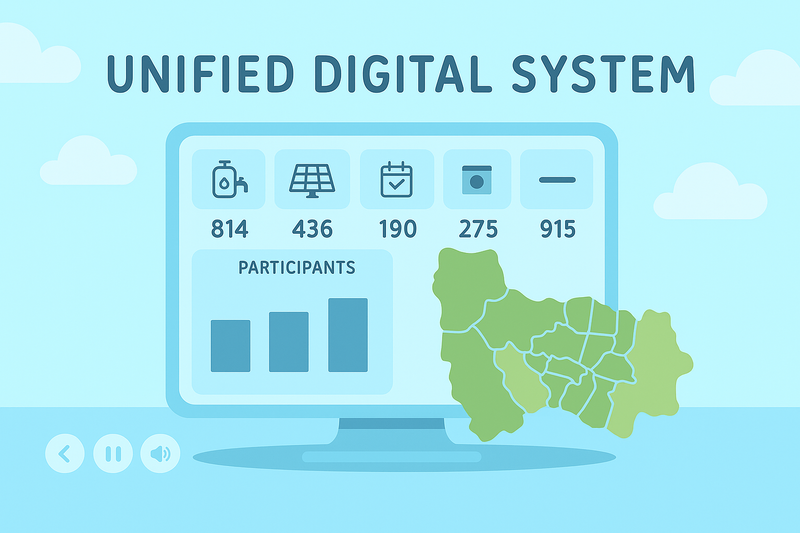
GGTC Kyiv
Medellín’s Secretariat of Environment uses a unified digital system with KoboToolbox and Power BI to monitor and display data on environmental education and sustainability projects, boosting transparency, citizen trust, and accountability in participatory budgeting initiatives citywide. Participatory Budgeting for the Environment: Medellín’s Path to Community-Led SustainabilitySince the early 2000s, Medellín has embraced Participatory Budgeting (PB) as a way to involve citizens directly in the allocation of public funds at the local level. Every year, communities in the city’s communes and corregimientos vote to prioritise projects that address their specific needs. This mechanism, rooted in Colombia’s 1991 Constitution and institutionalised in Medellín through public policy in 2007, reflects the city's commitment to strengthening democracy, equity, and territorial development by ensuring that a portion of public spending is decided by the people.Within this broader strategy, the Secretariat of Environment, responsible for defining and implementing environmental policies and strategies aimed at the conservation and sustainability of natural resources, has implemented community-based environmental initiatives funded by PB. These include educational workshops on sustainability, the creation of ‘sustainable households’ through the installation of eco-technologies (such as composting systems, water harvesting units, and energy-saving devices), and campaigns to promote responsible consumption and waste reduction. Through PB, these actions have been tailored to the specific needs of each territory, fostering environmental awareness and citizen engagement across Medellín. In those communities where the environmental actions were not prioritised, the Secretariat executes environmental activities as well, according to the prioritisation carried out by the Development Plan of the District and the analysis made by the Secretariat.Before 2020, the implementation of these PB-funded environmental initiatives faced coordination and accountability challenges. Contractors were selected through public bidding processes, and although they were required to report their activities, this reporting was typically done through presentations or deliverables shared directly with the community, using whatever format each contractor deemed appropriate. The Secretariat of Environment did not receive this information in a standardised or systematised way, which made it impossible to consolidate data across projects or territories.As a result, the Secretariat lacked a complete and centralized understanding of what was being implemented, how resources were being used, and what outcomes were being achieved — limiting both strategic planning and transparency. Moreover, the fragmented and inconsistent nature of the data made it difficult to extract insights or lessons learned that could inform future interventions or improve program design at the city level.A Unified Digital System for Transparent Environmental ActionIn 2020, the Secretariat of Environment partnered with the University of Antioquia — who had previously served as a contractor in some communes and was already familiar with the program’s operations — to design a comprehensive and centralised solution. This collaboration marked the transition from scattered implementation to a unified model, formalised through an inter-administrative agreement between two public institutions. The new approach aimed to ensure greater consistency, technical standardisation, and cost efficiency by replacing the previous system based on multiple independent contractors.As part of its work as a contractor, the University of Antioquia had already been using KoboToolbox — a data collection, management, and visualisation platform — to collect field data from the activities it executed. The platform proved useful for capturing structured and georeferenced information — even in offline conditions — using mobile devices. Building on this experience, the University proposed adopting KoboToolbox more broadly as the standard tool for data collection across all PB-funded environmental education initiatives. Recognising its potential to unify and digitise field operations, the Secretariat decided in 2021 to formally adopt the tool as its official data collection system.With this decision came the need to build internal capacity. The Secretariat, along with the University of Antioquia, carried out training processes for both public officials and field contractors. These trainings included instruction on how to use KoboToolbox forms in the field, how to ensure consistent data quality, and how to access and interpret the information collected. This process laid the groundwork for a more autonomous and technically competent institutional team. Then, in 2023, the Secretariat acquired its own enterprise license to ensure full ownership and control over the information gathered — extending its use to all environmental initiatives, regardless of funding source.Today, more than 250 field staff are contracted annually to execute activities and use KoboToolbox during an intensive four-month implementation period, typically in the second half of the year. Each person uses their own mobile device to collect real-time data on actions such as workshops, eco-gardens, and citizen engagement efforts. The use of a single, institutional form ensures that data is standardized, traceable, and centralized across the entire district.In parallel, the University had also been using Power BI to visualise the data it collected, presenting progress and insights through dynamic dashboards. Once the Secretariat adopted KoboToolbox, it also embraced Power BI as the visualisation tool of choice — leveraging the city’s existing Microsoft Office license to operate the dashboards under the Secretariat’s own account. This decision ensured that the Secretariat had direct access and control not only over the data being collected but also over how it was presented and analyzed.The Power BI dashboard — developed by the University using the Secretariat’s license — is directly connected to KoboToolbox forms, enabling automatic updates and real-time visualisation. It displays georeferenced data disaggregated by territory, type of activity, and key indicators, allowing technical teams and decision-makers to monitor implementation, identify gaps, compare performance across communes, and support evidence-based planning. It is also published on the Secretariat’s official website, giving citizens access to explore which actions were implemented in their communities, how many people participated, and what results were achieved. Based on internal feedback, the dashboard’s interface has been gradually improved to enhance clarity, usability, and data navigation.The transition to this model has also brought administrative and financial benefits. The inter-administrative agreement with the University of Antioquia — already experienced in executing similar initiatives — replaced a model based on public bidding that often brought in contractors with varying levels of expertise. In doing so, the Secretariat achieved cost savings of 19 percent from VAT exemption and an additional 10 percent by eliminating administrative and profit margins typical of private contracts. Centralising execution and data management under one institutional framework has allowed for improved planning, streamlined reporting, and a more efficient use of public resources.Images sourced from the Secretaría de Medio Ambiente de Medellín, illustrating the platform’s interface.Data-Driven Trust: Transforming Environmental GovernanceThis system has boosted the Environmental Secretariat’s role as strategic manager of environmental education and sustainability efforts. With access to detailed, real-time insights, they can now identify which territories need greater support, which actions generate the highest engagement, and how to better allocate resources. This has enabled more targeted interventions and strengthened the alignment between community needs and public action.Beyond internal improvements, the platform has fostered a culture of openness and collaboration. It has empowered citizens not just to vote on environmental priorities, but to track how those priorities materialize over time. Community members can see tangible progress in their own neighborhoods. This visibility has deepened civic trust and helped transform environmental programs from isolated events into sustained, collective efforts.This growing trust is also reflected in citizens' increasing participation: while in 2020 only six communes prioritized environmental initiatives through Participatory Budgeting, by 2025 that number had more than doubled, with 14 communes allocating resources to these efforts. On the institutional side, the Secretariat now has access to a level of information that was previously unattainable. In the past, contractors would present isolated reports to each community, and the data would remain buried in folders, unanalyzed and disconnected. Today, data is consolidated across the district, allowing the Secretariat to identify not only which neighborhoods they’ve reached, but also those where impact has been limited or absent. In Commune 6, for example, PB funds are consistently prioritized for environmental education, yet the dashboard has revealed specific neighborhoods within the commune where results remain insufficient. It has also made visible where the same actions have been repeated with limited effect. We can now say that these insights now inform the design of more adaptive and responsive interventions.
From Data to Trust: How Medellín is Making Environmental Education and Local Action Transparent

Centre for the Fourth Industrial Revolution, Medellín, Alcaldia de Medellin
This article is authored by Ansgar Baums, Author of ‘Tech Cold War’ and ‘Die Stunde der Nashörner’, and Manuel Kilian, Managing Director, Global Government Technology Centre Berlin.Europe's digital future must not get caught up in endless definitional loops. The following ten bold theses aim to cut through the current rhetoric and chart a pragmatic path involving strategic bets, smart interdependence and grounded risk assessment.Debates around the two terms of 'digital sovereignty' and 'Euro Stack' dominate European policy circles, yet they have become increasingly trapped in endless semantic sparring matches. Each new paper offers its own interpretation of these contested terms, and in the meantime, Europe is losing precious time in a rapidly evolving digital landscape. The result is frustrating: shallow terminology, circular arguments and, critically, a lack of meaningful progress.This article takes a different approach. Rather than adding to definitional chaos, it presents ten substantive theses that address the core of Europe's digital challenge. These theses focus on three key areas: fundamental questions about the nature of sovereignty itself; strategic priorities and resource allocation; and a realistic assessment of the specific risks dominating policy discussions. Several of the theses draw on valuable contributions from others already engaged in this debate, which we greatly appreciate.Together, the ten theses invite all those engaged in these debates to join a more structured and focused discussion — disagreement with and critique explicitly welcome. In this sense, please consider this an initial version that we hope to complement with future work on more specific policy recommendations. If you would like to contribute or get involved otherwise, please get in touch with us.Intelligent Dependence Is the Goal1. Digital Sovereignty Means Intelligent (Inter-)Dependence, Not Digital IndependenceDigital sovereignty is the agency and capacity of any organisation to make intelligent, informed choices to shape its digital future by design (as argued here by Mike Bracken CBE). If sovereignty is defined as owning every layer of a technological stack, it can quickly become counterproductive. This leads to fragmented systems, limited interoperability and a retreat from global cooperation. Instead, the goal is intelligent dependence and interdependence (cf. thesis number 3). This involves making better decisions about what to depend on, under what conditions and for how long.2. There Is No Viable Alternative for Europe to the Transatlantic Digital HemisphereEurope depends on an accessible and growth-focused transatlantic digital hemisphere. There is no economically viable alternative — regardless of shifting political currents on either side of the Atlantic. Europe is dependent on access to the US market, particularly at a time when the future of market access in China is uncertain. Furthermore, the establishment of a separate European digital hemisphere would not be in the interest of European-based global companies. Access to best-in-class digital technologies is absolutely crucial for European companies to grow globally. Making the employment of such technologies more difficult is the opposite of smart industrial policy-making.In the Euro Stack debate, some voices seem to neglect the significant cost of achieving complete digital self-reliance. Creating a separate European IT stack would be extremely costly — estimates go in the trillions of euros. For example, establishing a European operating system for mobile devices could, according to our own rough estimates, cost EUR 15 billion, while global investments in data centre expansion could reach USD 3 trillion by 2028. These investments would necessarily divert capital from other strategic priorities — making this fundamentally a question of optimal capital allocation. Europe would struggle to fund such investments, and even if this were possible, the opportunity cost of foregoing alternative investments would be substantial.Irreplaceability Instead of Going It Alone3. Europe Must Achieve Irreplaceability within the Western IT StackWhile Europe should deepen its integration with the transatlantic digital sphere, it needs to actively manage the strategic risks that come with it — this is the core policy conundrum that needs solving that many policy papers miss. In reality, managing the strategic risks will mean optimising for mutual interdependence, where both sides of the Atlantic have strong incentives to cooperate, and the cost of decoupling is too high for either to bear. Such Interdependence is achieved by making Europe irreplaceable within the Western IT stack. The more technologies Europe builds that US companies and administrations rely on, the stronger Europe's leverage.4. Irreplaceability Will be Achieved by Making Big Bets on Next-Generation Technologies, Not Replicating Existing OnesFor Europe to become irreplaceable in the Western IT stack, it must make bold, strategic investments in next-generation technologies offering long-term leverage. Duplicating existing commercialised technologies, particularly in areas where others already dominate, dilutes focus and resources, and undermines Europe’s ability to lead where it can.Furthermore, a broader view of the tech stack is needed. Current debates fixate almost entirely on the cloud layer, overlooking where Europe is strongest: At the edge and the operational technology stack. This is where AI is set to transform industrial verticals such as manufacturing and automotive, as well as industrial automation — verticals in which Europe has a real advantage. A forward-looking strategy should build on these strengths rather than chasing yesterday's successes.Demand-Driven Innovation, Not Supply-Side Fantasies5. Stacks Are Not Built in Isolation; They Emerge from Successful ServicesDigital ecosystems do not emerge from top-down engineering or pristine stack diagrams. They evolve from real-world, user-driven needs: a messy, iterative process grounded in solving specific problems. Services come first. Platforms follow. Infrastructure is successful when it is the by-product of providing something that people actually want (as rightfully argued here by Mike Bracken, David Eaves and Michelle Wronski).This core truth is often overlooked in the seductive clarity of 'stack thinking'. Amazon did not start by building its cloud service AWS — it began by selling books online. The infrastructure came much later, shaped by real commercial demand. The same logic must apply to Europe. Rather than building abstract infrastructure in search of applications, we should focus on solving real problems for users and businesses. Successful services generate the gravity that makes infrastructure useful — and ultimately, sovereign.6. Act as One Market, Attractive for Others to JoinNo European country has the market size to sustain an independent digital ecosystem. Even collectively, the EU's 450 million users are fewer than those in China or India alone. This reality demands two parallel strategies. Firstly, Europe must finally create a genuine single digital market — eliminating the fragmentation that allows a US startup to access 340 million users immediately while European startups face 27 different regulatory regimes. Second, this unified European market should be open to global partners through the adoption of open standards and interoperability protocols. The goal is not to create a fortress Europe, but rather an open and attractive digital ecosystem that others will want to participate in.Public Sector Procurement and Open Source: Strategic Instruments, Not Silver Bullets7. Public Procurement Must Become Outcome-Focused and Stack-SavvyEuropean governments are facing an increasing legitimacy crisis. Citizens expect better public services, and when digital transformation initiatives fail, this fuels distrust and drives support for populist alternatives. Following the Second World War, liberal democracy was not only about values, but also about delivering better outcomes than authoritarian regimes. This promise now seems increasingly fragile.Public sector procurement cannot become a playground for digital sovereignty experiments that distract from its core purpose: Securing the best possible solutions at the best possible cost. It must remain relentlessly focused on outcomes. This is all the more important because procurement operations are already under pressure. In recent years, many countries have layered on complex qualitative criteria, yet most procurement offices remain under-resourced, risk-averse and overwhelmed by procedural burdens. In this context, procurement alone cannot — and should not — carry the full weight of a country’s digital strategy.What must be done by governments, however, is procurement optimisation towards resilient technology architecture. This involves creating tenders that ask for modular, multi-vendor systems in which critical components, such as chips, cloud services and software, are considered replaceable commodities rather than permanent dependencies. The goal is strategic flexibility, not self-sufficiency for its own sake. When switching costs are low and credible alternatives exist, dependency becomes a choice rather than a risk. Equally important is the fact that public sector solutions that prove effective in one country should not be reinvented in another. If a service works, it should be adopted across Europe. 8. Open Source Is Here to Stay — but We Need to Be Realistic About Its RoleOpen source development and public sector interoperability can lay the foundations for a more inclusive digital ecosystem — one that fosters positive network effects rather than excluding potential partners. However, open source is not a silver bullet. In today's geopolitical environment, it faces real vulnerabilities, as demonstrated by the XZ Utils backdoor case. Rather than pretending such risks do not exist, Europe should take the lead in developing robust governance frameworks that ensure security, accountability and trust, rather than relying on the vague promise that 'anyone can inspect the code'.Unfortunately, the open source debate is often clouded by ideology, which harms its cause. It is common sense that some layers of the technology stack should be open source — this is already standard practice across much of the industry. However, insisting that open source solutions deserve preferential treatment simply because they are open misses the point. Some open source services are driven by the same commercial incentives as proprietary ones and are not necessarily more cost-effective.What is often lacking is a clear-eyed, comparative view. What is the actual total cost of ownership at feature parity? Which option delivers the best long-term value for the public sector? This is not about being for or against open source. It is about intellectual honesty and focusing on outcomes rather than slogans.Realistic Risk Assessments Instead of Doomsday Scenarios9. The ‘Kill Switch’ Scenario is Geopolitical Theatre, Not PolicyThe idea that the US political leadership could suddenly force American tech companies to shut down services for European clients — the so-called 'kill switch' — is largely a doomsday scenario used for rhetorical effect. Such an action would represent a severe breakdown in transatlantic relations, bordering on economic warfare. Disabling digital services used by public administrations or critical infrastructure would be considered an act of aggression and would almost certainly provoke retaliation by European governments. Such counter-measures would inflict crippling economic pain on both sides — just imagine European business software would be ‘kill switched’ in the US.Although the actual ‘kill switch’ scenario itself is bogus, the debate surrounding it should be taken seriously. It is a worrying sign that the transatlantic relations have degraded to a point where such doomsday scenarios are taken seriously by many. 10. CLOUD Act Risks Are Real but ManageableThe risks associated with the US CLOUD Act are often exaggerated. Some voices in the sovereignty debate frame the fact that US companies are subject to lawful access legislation as a reason to abandon or even outlaw the employment of US technology in Europe. This is disproportionate for two reasons: First, all companies, regardless of where their headquarters are located, are subject to lawful access legislation, and the CLOUD Act is no exception. Second and more specifically, US CLOUD Act legislation applies to any company with business operations in the US, even if the headquarters are in Europe, as the French cloud provider OVH has recently stated. Is it then wise to quit OVH because of it? Absolutely not. The same applies to the services of US headquartered companies.In practice, lawful access  does not pose an unmanageable risk, as the numbers suggest that these instances are very rare. Rather than fixating on doomsday scenarios, European governments should establish transparent and clear criteria for the use of cloud services within the public sector and critical infrastructure. Sound policy, legal safeguards and contractual controls can help to manage risk. Sovereignty is not about eliminating risk; it is about managing it effectively.
Better Stack (Part 1): 10 Theses to Demystify the Debate on Digital Sovereignty and the Euro Stack
GGTC Berlin